Set & Exhibit Designers
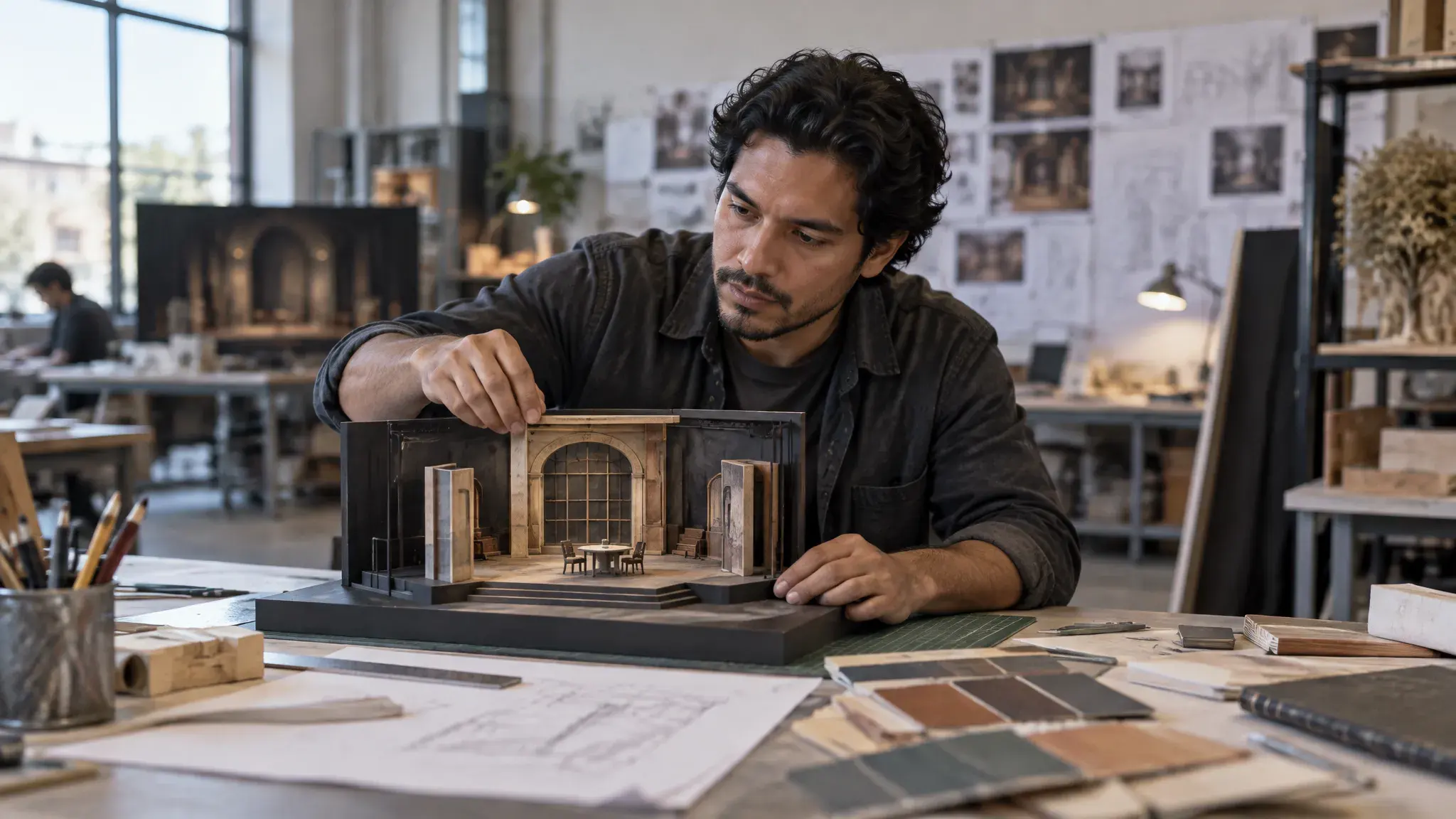
Designs the physical environments for theater productions, film sets, trade shows, or museum exhibits, turning a concept or script into a built, walkable space.
Salary
- Entry-level
- $42,000
- Mid-career
- $75,000
- Senior
- $135,500
Source: BLS OEWS, May 2025
Job outlook
- Growth, 2025–35
- +1%
- Slower than average
- Openings each year
- 2,200
- New jobs plus people retiring or moving on
- Jobs in 2025
- 31,600
- +500 by 2035
Source: BLS Employment Projections, 2025–35. Growth for all jobs is +3.5%. See the BLS profile
A day on the job
What people in this job typically spend their time doing.
- Read scripts or meet with clients to work out what a set or exhibit needs
- Draw floor plans, sketches, and scale drawings of the design
- Build scale models of sets or exhibits
- Research styles and details from the time period being shown
- Go to rehearsals and production meetings to coordinate with the crew
- Estimate costs and oversee building and installation of the set
Adapted from O*NET OnLine (27-1027.00), U.S. Department of Labor, used under the CC BY 4.0 license.
Getting in
A degree is required for this career.
Recommended degrees
Progression
- Design Assistant, Draftsperson, or Scenic Carpenter
- Assistant Set or Exhibit Designer
- Set, Production, or Exhibit Designer
- Production Designer, Art Director, or Head of Exhibitions
Where this can lead

Top Employers
- Theaters and performing arts companies Hire designers per production; many designers freelance across several theaters.
- Film and TV productions Art departments hire set designers and art directors, often through union membership.
- Museums and exhibit design firms Design permanent and traveling exhibits, plus trade-show booths for companies.
Networking & job search

- Work on school and community productions to build a portfolio of built sets, not just drawings.
- Assisting an established designer is the most common way to learn the trade and get introduced to producers and theaters.
- Learn drafting and 3D modeling software (e.g. Vectorworks, SketchUp) — most design is now done digitally first.
Example trajectories
Elena
Theater design MFA → assistant scenic designer at a regional theater → set designer for regional productions → designer on a national tour.
Ben
Interior design degree → exhibit designer at a trade-show company → senior exhibit designer at a science museum.