Geoscientists
Studies the physical structure and processes of the Earth — rock formations, groundwater, natural hazards, mineral and energy deposits — for consulting firms, energy companies, or government geological surveys, mixing fieldwork with lab and data analysis.
Salary
- Entry-level
- $59,500
- Mid-career
- $102,000
- Senior
- $200,000
Source: BLS OEWS, May 2025
Job outlook
- Growth, 2025–35
- +5%
- Faster than average
- Openings each year
- 1,800
- New jobs plus people retiring or moving on
- Jobs in 2025
- 25,400
- +1,300 by 2035
Source: BLS Employment Projections, 2025–35. Growth for all jobs is +3.5%. See the BLS profile
A day on the job
What people in this job typically spend their time doing.
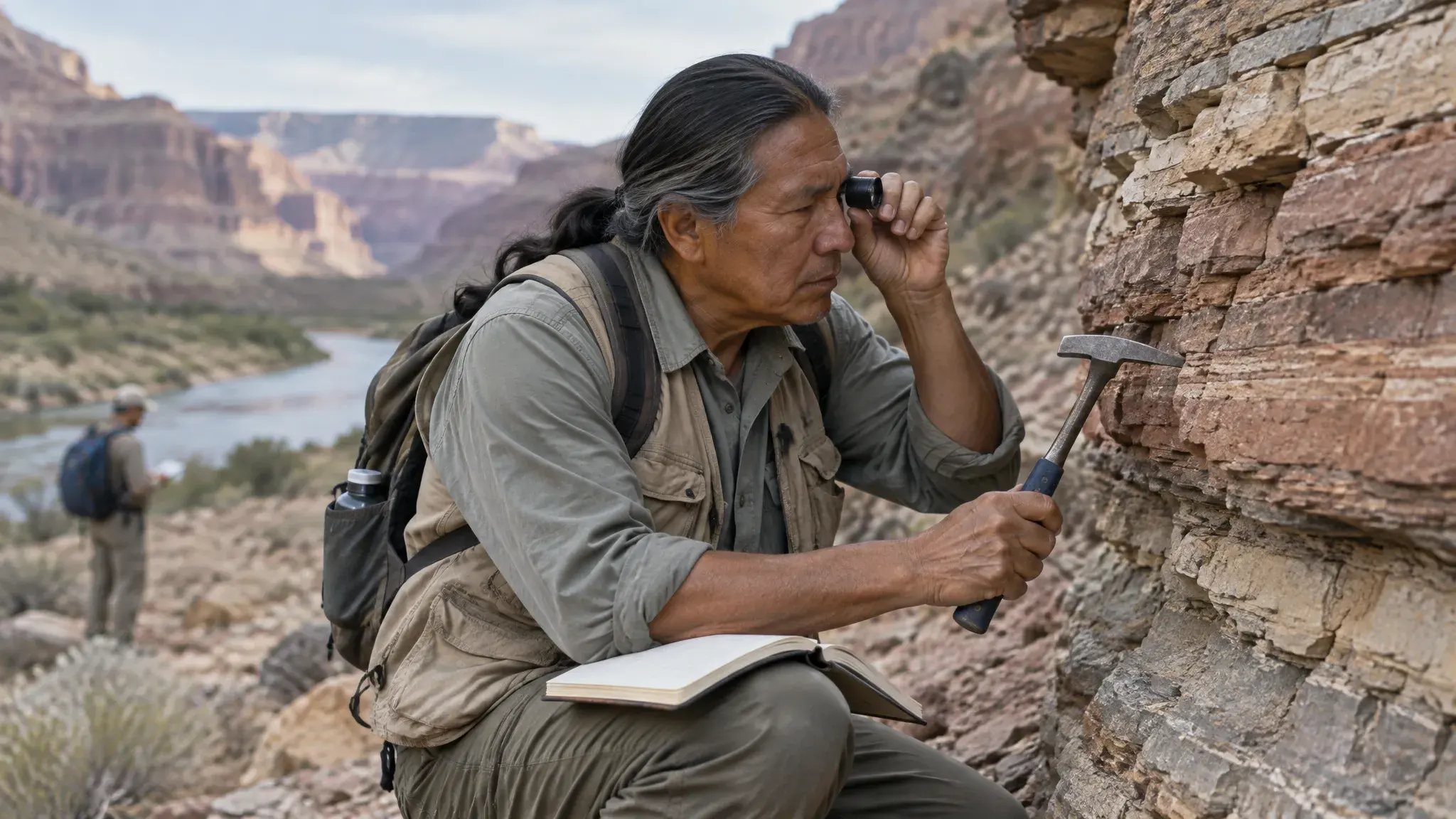
- Plan and carry out field studies to collect rock, soil and water samples
- Analyze and interpret geological data using computer software
- Make geological maps, cross-section diagrams and charts
- Locate likely deposits of oil, gas, minerals or underground water
- Identify risks of natural disasters such as earthquakes and landslides
- Share findings through research papers, reports and conferences
Adapted from O*NET OnLine (19-2042.00), U.S. Department of Labor, used under the CC BY 4.0 license.
Getting in
A degree is required for this career.
Recommended degrees
Progression
- Staff Geologist / Field Geologist
- Geoscientist
- Senior Geoscientist
- Chief Geologist / Principal Consultant
Where this can lead


Top Employers
- Oil, gas, and mining companies The highest-paying track, locating and assessing energy and mineral deposits — pay swings with commodity prices and can mean remote or rotational fieldwork.
- Environmental consulting firms Site assessments and contamination studies for clients navigating environmental regulations — steadier work than the energy sector, at somewhat lower pay.
- State geological surveys and the USGS Public-sector mapping and hazard research, often the field's most common entry point for seasonal fieldwork straight out of a geology program.
Networking & job search

- The American Geosciences Institute and the Geological Society of America both run student chapters with access to field trips and job boards worth using early.
- State geological surveys and the USGS regularly hire undergraduates for seasonal field mapping work, which is a common and well-regarded entry point.
- Energy and mining companies recruit heavily at dedicated geoscience career fairs (often run through schools like Colorado School of Mines), even for students elsewhere.
Example trajectories
Owen
Geology degree → seasonal field geologist mapping for a state geological survey → geoscientist at an environmental consulting firm, 5 years in.