Forest & Conservation Workers
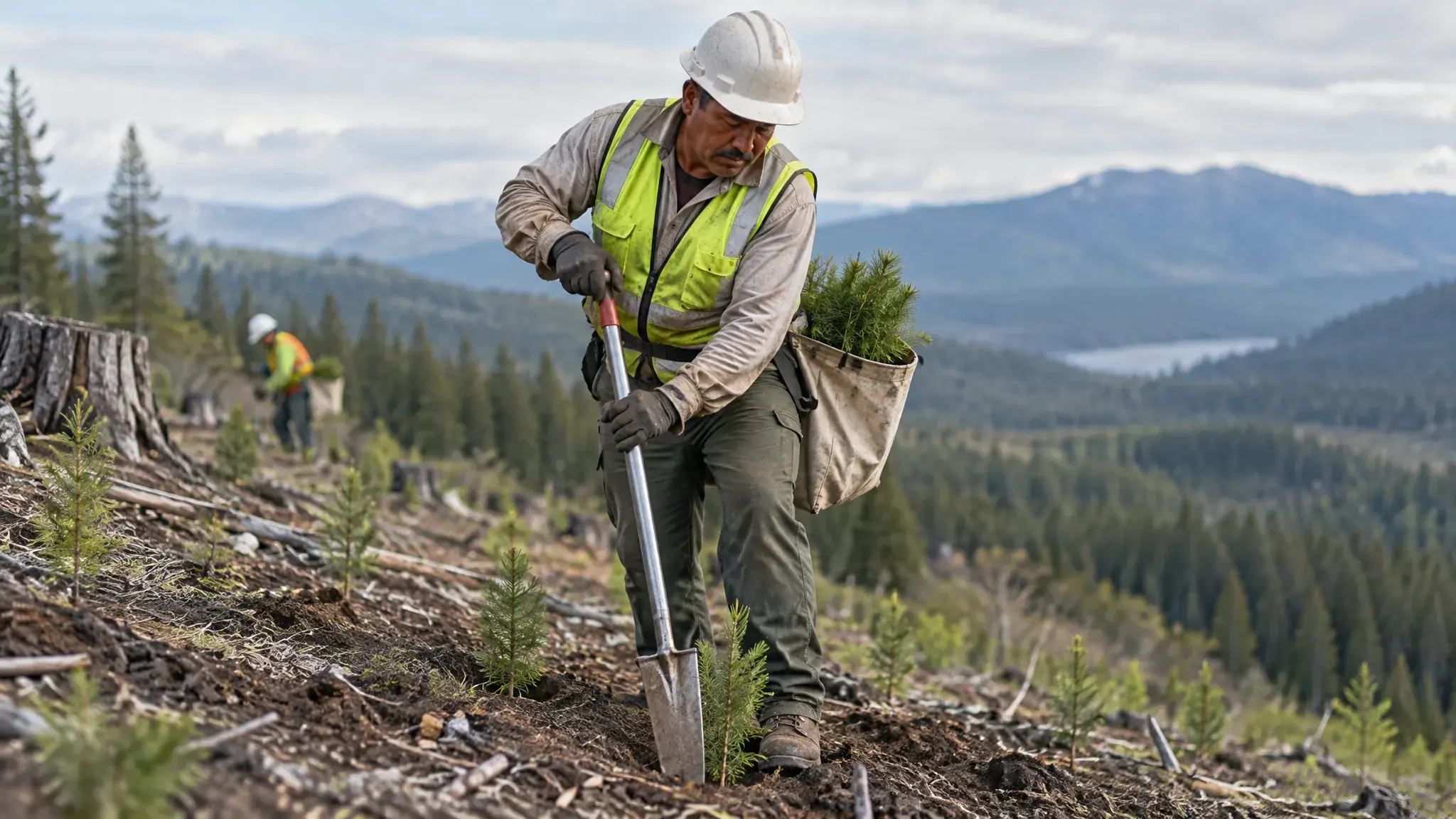
Plants trees, clears brush, fights invasive species, and maintains trails and forest land for logging companies, parks departments, or conservation organizations — physical outdoor work supporting forest health and land management.
Salary
- Entry-level
- $34,000
- Mid-career
- $43,500
- Senior
- $57,000
Source: BLS OEWS, May 2025
Job outlook
- Growth, 2025–35
- −2%
- Decline
- Openings each year
- 2,200
- New jobs plus people retiring or moving on
- Jobs in 2025
- 14,700
- −200 by 2035
Source: BLS Employment Projections, 2025–35. Growth for all jobs is +3.5%. See the BLS profile
A day on the job
What people in this job typically spend their time doing.
- Plant tree seedlings in areas being replanted
- Thin, prune and cut down diseased or unwanted trees
- Clear brush and build fire breaks, and help fight forest fires
- Spray plants with herbicides or insecticides to control pests
- Maintain campsites and recreation areas and put up signs and fences
- Check equipment and talk with crew members about safety
Adapted from O*NET OnLine (45-4011.00), U.S. Department of Labor, used under the CC BY 4.0 license.
Getting in
No degree is required — most forest and conservation workers start with a seasonal position through a conservation corps or state forestry department and build skills on the job.
Progression
- Seasonal Forest Worker
- Forest & Conservation Worker
- Crew Lead / Forestry Technician
Where this can lead
Top Employers
- U.S. Forest Service and state forestry departments The most common public-sector employer, often starting with a seasonal position that can turn into permanent work.
- Logging and timber companies Private timber operations pay more for physically demanding work like clearing and planting, tied closely to harvest cycles.
- Conservation corps and land trusts Nonprofit and volunteer-based programs are a common training entry point, usually at lower pay than government or private-sector roles.
Networking & job search

- State conservation corps programs (a state's version of AmeriCorps' conservation corps) are a common, structured entry point with training included.
- State forestry departments and the U.S. Forest Service post seasonal worker positions that regularly turn into permanent roles for reliable workers.
- Local land trusts and conservation nonprofits often start volunteers on trail and habitat work before offering paid seasonal positions.
Example trajectories
Seasonal conservation corps crew member → forest worker for a state forestry department → crew lead managing a wildfire fuel-reduction team, 5 years in.