Environmental Science & Protection Technicians
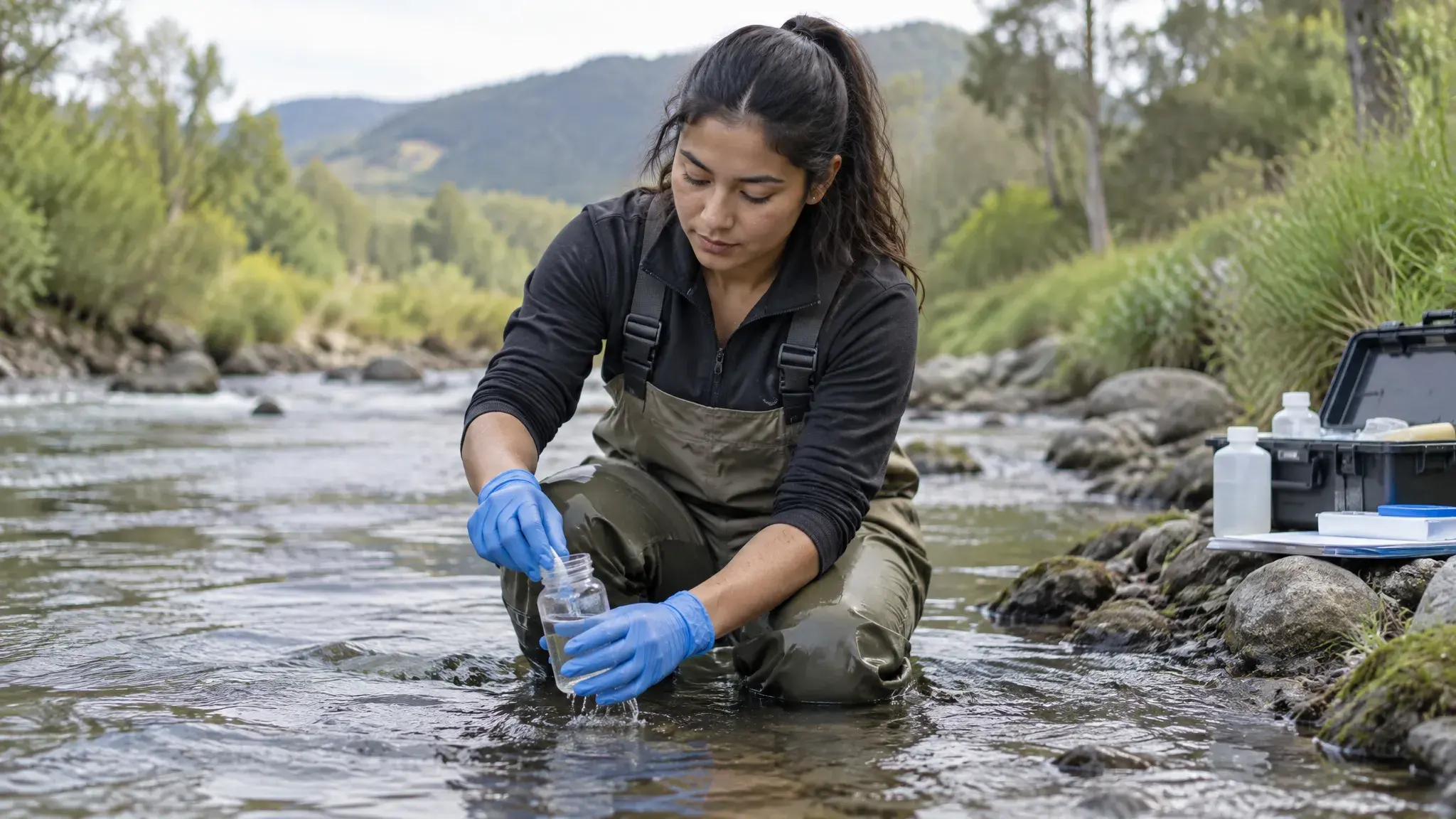
Collects water, air, and soil samples and monitors pollution or compliance data in the field, then processes and logs it for environmental scientists and regulatory agencies — the hands-on fieldwork side of environmental monitoring.
Salary
- Entry-level
- $38,000
- Mid-career
- $55,000
- Senior
- $94,000
Source: BLS OEWS, May 2025
Job outlook
- Growth, 2025–35
- +7%
- Much faster than average
- Openings each year
- 5,300
- New jobs plus people retiring or moving on
- Jobs in 2025
- 36,400
- +2,500 by 2035
Source: BLS Employment Projections, 2025–35. Growth for all jobs is +3.5%. See the BLS profile
A day on the job
What people in this job typically spend their time doing.
- Collect air, water and soil samples to test for pollution
- Investigate spills and other hazards and gather samples for testing
- Set up and calibrate equipment that measures pollution
- Run lab tests and calculate how much pollution a sample contains
- Record test results and write reports with charts and summaries
- Share results with clients, employers, officials and the public
Adapted from O*NET OnLine (19-4042.00), U.S. Department of Labor, used under the CC BY 4.0 license.
Getting in
An associate degree in environmental science, environmental technology, or a related field is the standard path — a four-year degree isn't required for entry-level technician roles.
Degrees that help
Progression
- Environmental Technician
- Senior Environmental Technician
- Field Supervisor / Compliance Coordinator
Where this can lead

Top Employers
- State environmental agencies The most common employer, running compliance monitoring programs with reliable public-sector hours and benefits.
- Regional water utilities Utilities hire technicians to run ongoing water-quality testing, offering steadier year-round work than seasonal fieldwork.
- Environmental consulting firms Consulting pays somewhat more and exposes technicians to a wider range of projects, but work can be less predictable between contracts.
Networking & job search

- State environmental agencies and regional EPA offices hire technicians directly out of associate-degree and certificate programs.
- The National Association of Environmental Professionals' student membership connects technicians with practicing scientists for mentorship.
- Volunteer stream-monitoring or air-quality programs build the fieldwork portfolio that hiring managers ask about in technician interviews.
Example trajectories
Associate degree in environmental technology → field technician for a regional water utility → senior technician running a stream-monitoring program, 4 years in.