Food Preparation Workers
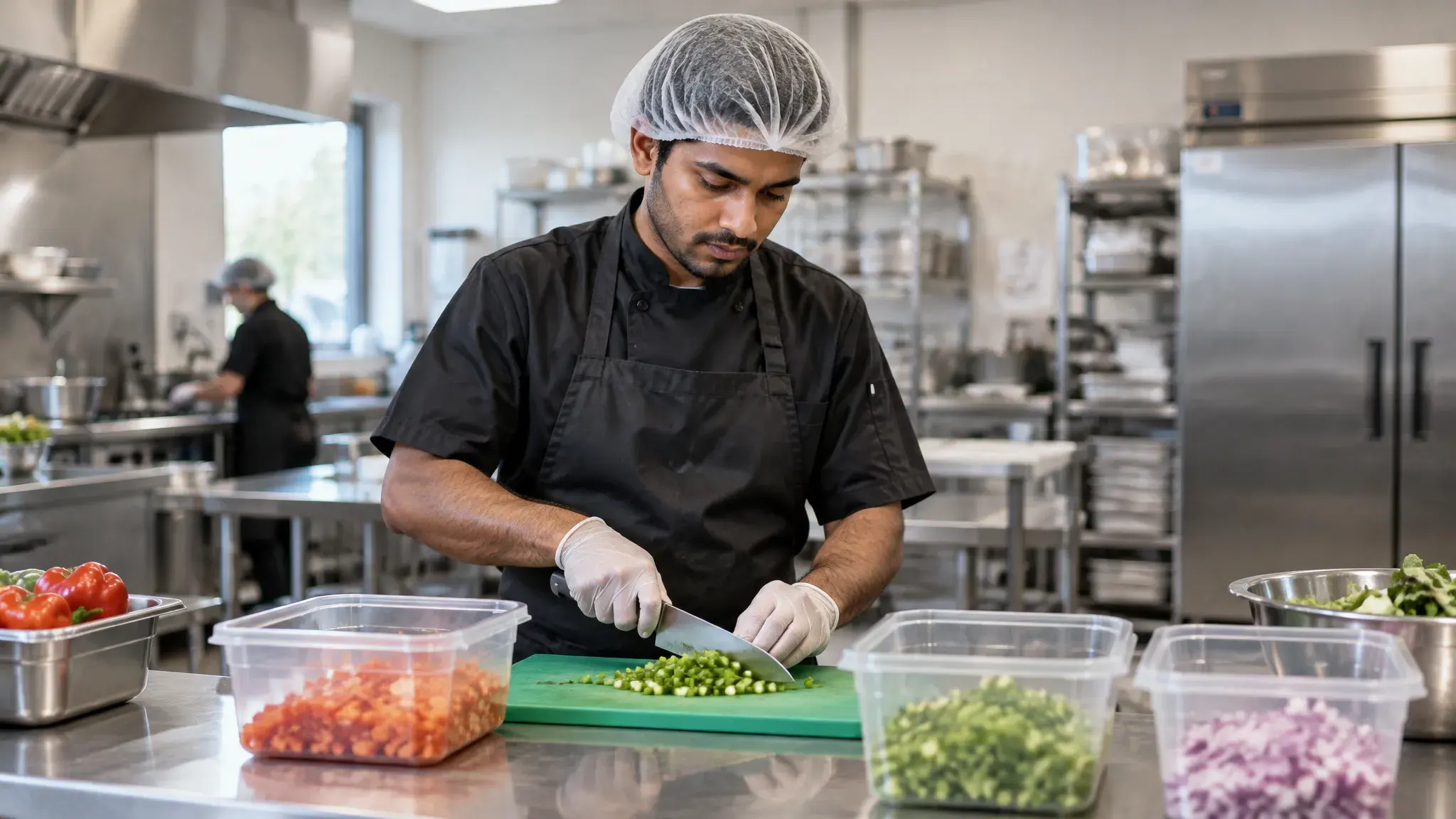
Handles the prep work that keeps a kitchen running — washing and cutting ingredients, portioning, basic assembly — supporting cooks and chefs during service.
Salary
- Entry-level
- $26,000
- Mid-career
- $35,500
- Senior
- $45,500
Source: BLS OEWS, May 2025
Job outlook
- Growth, 2025–35
- −3%
- Decline
- Openings each year
- 135,700
- New jobs plus people retiring or moving on
- Jobs in 2025
- 908,500
- −27,200 by 2035
Source: BLS Employment Projections, 2025–35. Growth for all jobs is +3.5%. See the BLS profile
A day on the job
What people in this job typically spend their time doing.
- Wash, peel, and cut fruits, vegetables, and meats for cooks
- Weigh and measure ingredients and make salads, sauces, and dressings
- Store food properly and check refrigerator and freezer temperatures
- Carry supplies to the kitchen and tell supervisors when stock runs low
- Clean and sanitize work areas, dishes, and kitchen equipment
- Portion and wrap food or set it out at buffets and salad bars
Adapted from O*NET OnLine (35-2021.00), U.S. Department of Labor, used under the CC BY 4.0 license.
Getting in
Food preparation workers typically need no more than a high school diploma and on-the-job training rather than a college degree.
Progression
- Food Prep Worker
- Prep Cook
- Line Cook
- Kitchen Supervisor or Sous Chef
Where this can lead


Top Employers
- Restaurants Prep ingredients before and during service.
- Grocery stores (e.g. Kroger, Whole Foods) Deli and prepared food counters.
- Schools, hospitals, and cafeterias Regular daytime schedules.
Networking & job search

- This is a common first kitchen job — learn knife skills and ask to train on the line.
- A food handler card is quick to earn and required in some states.
- Grocery stores and cafeterias often offer more regular schedules than restaurants.
Example trajectories
Liam
Grocery store deli worker → prep cook at a restaurant → line cook.