Film & Video Editors
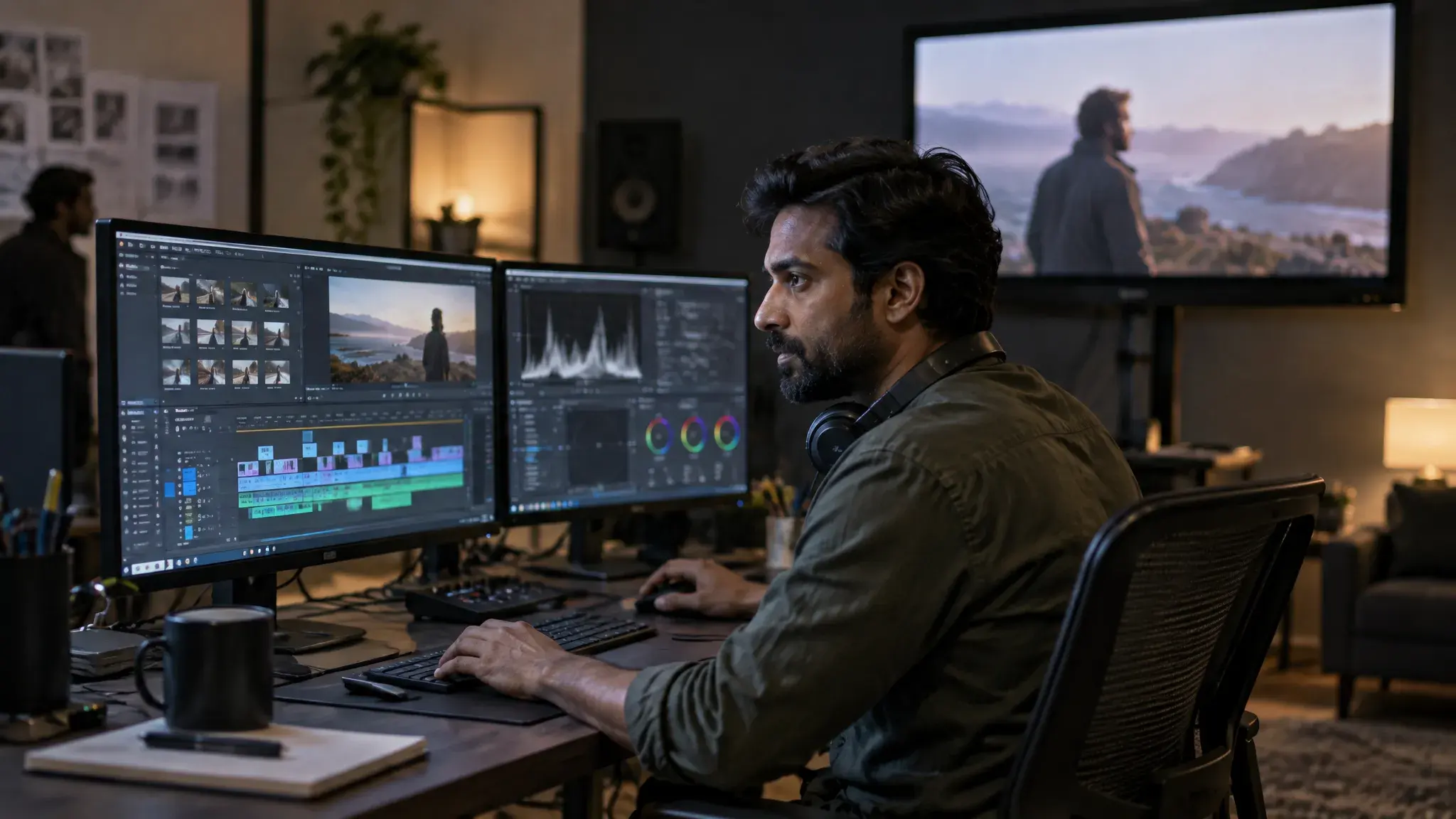
Operates cameras and edits raw footage into finished film, television, or online video content, shaping pacing, narrative, and visual style on set and in the editing bay.
Salary
- Entry-level
- $40,500
- Mid-career
- $75,500
- Senior
- $148,500
Source: BLS OEWS, May 2025
Job outlook
- Growth, 2025–35
- +3%
- As fast as average
- Openings each year
- 5,600
- New jobs plus people retiring or moving on
- Jobs in 2025
- 72,000
- +1,900 by 2035
Source: BLS Employment Projections, 2025–35. Growth for all jobs is +3.5%. See the BLS profile
A day on the job
What people in this job typically spend their time doing.
- Study scripts and review raw footage before starting an edit
- Choose the best shots and piece them together into a smooth story
- Add music, dialogue, sound effects and graphics
- Set up and run computer editing software and equipment
- Meet with directors and producers to plan edits and show them cuts
- Watch edited versions closely to spot fixes that are needed
Adapted from O*NET OnLine (27-4032.00), U.S. Department of Labor, used under the CC BY 4.0 license.
Getting in
A degree is required for this career.
Recommended degrees
Progression
- Production Assistant or Assistant Editor
- Editor or Camera Operator on Smaller Projects
- Lead Editor or Director of Photography
- Supervising Editor, Post-Production Supervisor, or Cinematographer on Major Productions
Where this can lead
Top Employers
- Film and TV studios and streaming services (e.g. Netflix, Warner Bros. Discovery) The best-paying and most competitive work, concentrated in Los Angeles, New York, and Atlanta.
- Post-production houses and ad agencies Steady editing work on commercials, trailers, and branded content.
- Corporate video teams and freelance clients Many editors freelance, and more companies now keep in-house video teams for marketing and training content.
Networking & job search

- Work on student films, indie shorts, and local productions — crews hire people they've already worked alongside, so every set is an audition.
- Keep a reel of your best two or three minutes, cut for the kind of work you want next (documentary, commercial, or narrative).
- For higher-paying film and TV work in the big production hubs, unions like the Motion Picture Editors Guild and IATSE camera locals matter — learn their entry rules early.
Example trajectories
Film degree → production assistant on commercial shoots → assistant editor at a post-production house → editor on documentary series, 6 years in.
Self-taught camera work for local bands → freelance videographer for weddings and events → camera operator for a regional sports network.