Construction Laborers & Helpers
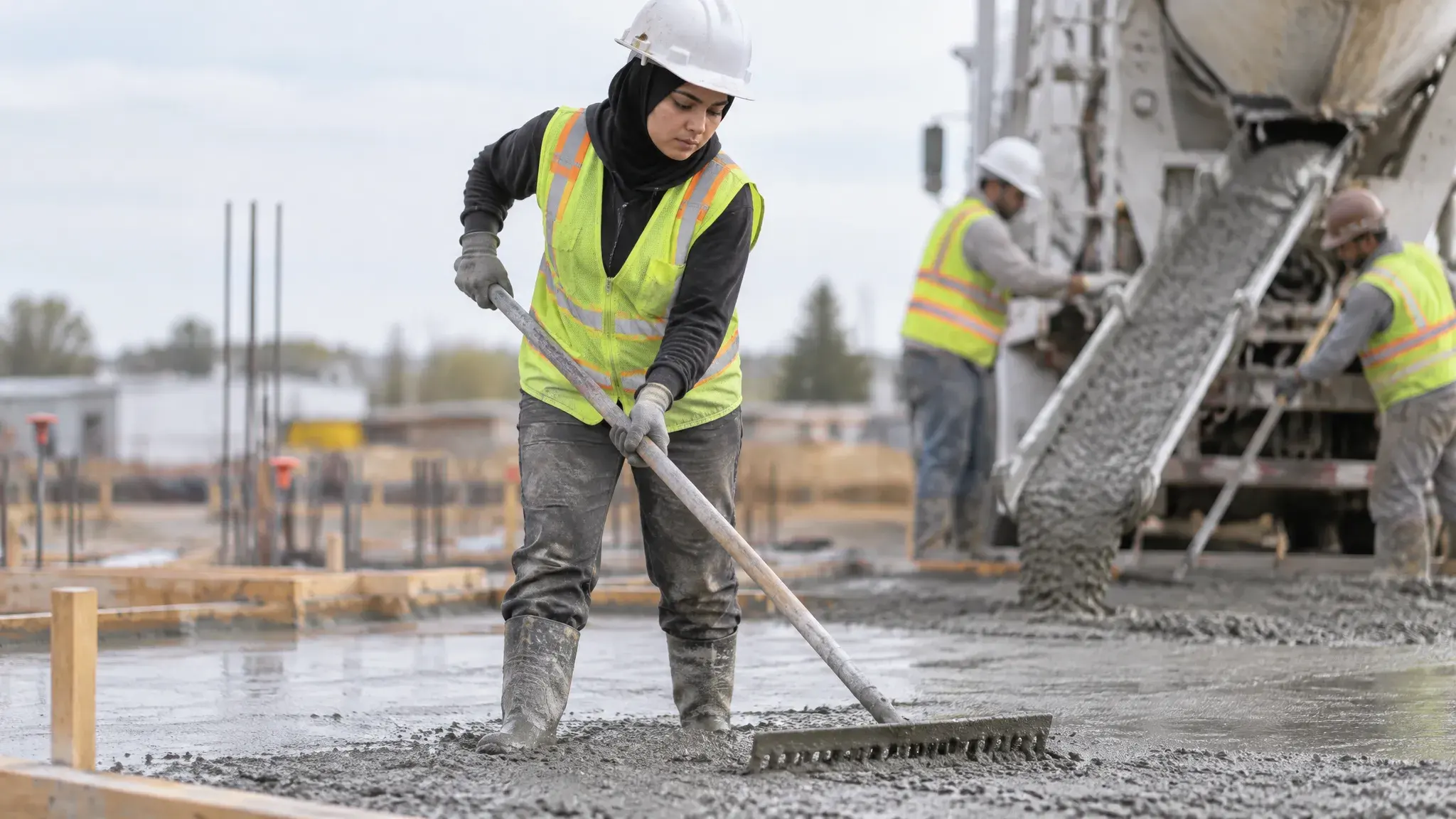
Performs the physical groundwork of construction sites — digging, hauling materials, operating hand tools, and assisting skilled tradespeople — often a first step into the broader construction trades.
Salary
- Entry-level
- $35,000
- Mid-career
- $46,500
- Senior
- $76,500
Source: BLS OEWS, May 2025
Job outlook
- Growth, 2025–35
- +6%
- Faster than average
- Openings each year
- 137,000
- New jobs plus people retiring or moving on
- Jobs in 2025
- 1,674,400
- +108,600 by 2035
Source: BLS Employment Projections, 2025–35. Growth for all jobs is +3.5%. See the BLS profile
A day on the job
What people in this job typically spend their time doing.
- Clean up and prepare job sites to remove safety hazards
- Load, unload, and carry building materials and tools to where they're needed
- Dig trenches, fill holes, and level the ground with shovels and other tools
- Signal equipment operators to help position machinery and materials
- Read plans and measure and mark where work will be done
- Direct traffic around work zones
Adapted from O*NET OnLine (47-2061.00), U.S. Department of Labor, used under the CC BY 4.0 license.
Union or non-union
How common unions are varies a lot by trade and by state. Joining one changes how you train, find work and get paid.
- Union members
- 16.4%
- of construction trade workers, vs 5.9% across the private sector
- Union, median weekly pay
- $1,561
- Full-time union members
- Non-union, median weekly pay
- $1,004
- Full-time workers not in a union
Union
Laborers' International Union of North America (LIUNA)
- Train in a registered apprenticeship run jointly by the union and its contractors, paid on the job
- Get sent to jobs from the union's referral list (the hiring hall), so work can follow you from one contractor to the next
- Pay, raises, health coverage and usually a pension are set by a contract
- Pay union dues, and between jobs you may wait your turn on the out-of-work list
- Laborer apprenticeships are usually sponsored by local unions or trade associations
Non-union
Often called merit shop or open shop
- Train through a contractor group such as Associated Builders and Contractors, a company program, a trade school or on the job
- Get hired directly by a contractor, with no hall or list to wait on
- Pay and benefits are set by each employer, so they vary more from shop to shop
- No dues; raises and promotions depend on the employer and your own record
Membership and pay are for all construction and extraction occupations in BLS Union Members, 2025 (earnings table), not this trade alone. Part of the pay gap reflects where union jobs are, which varies a lot by state and type of project, so compare real offers where you live. Also see BLS: Construction laborers and helpers and Associated Builders and Contractors.
Getting in
This is an entry-level role with no formal education required; many laborers use it to learn a trade on the job before specializing.
Progression
- Construction Laborer or Helper
- Skilled Laborer or Apprentice in a Trade
- Journeyworker or Crew Lead
- Foreman or Superintendent
Where this can lead


Top Employers
- General contractors Build homes, offices, and schools.
- Highway and utility contractors Roads, bridges, and pipes.
- Staffing and union hiring halls Steady access to new jobs.
Networking & job search

- Union apprenticeships through the Laborers' International Union (LiUNA) offer paid on-the-job training plus classes, often with no tuition.
- OSHA 10 safety training is quick and helps you get hired.
- Use laborer jobs to try different trades, then apply for an apprenticeship in the one you like.
Example trajectories
Laborer → carpentry apprenticeship → journeyworker carpenter → site superintendent.
Helper on a highway crew → pipe layer → crew foreman.