Carpenters
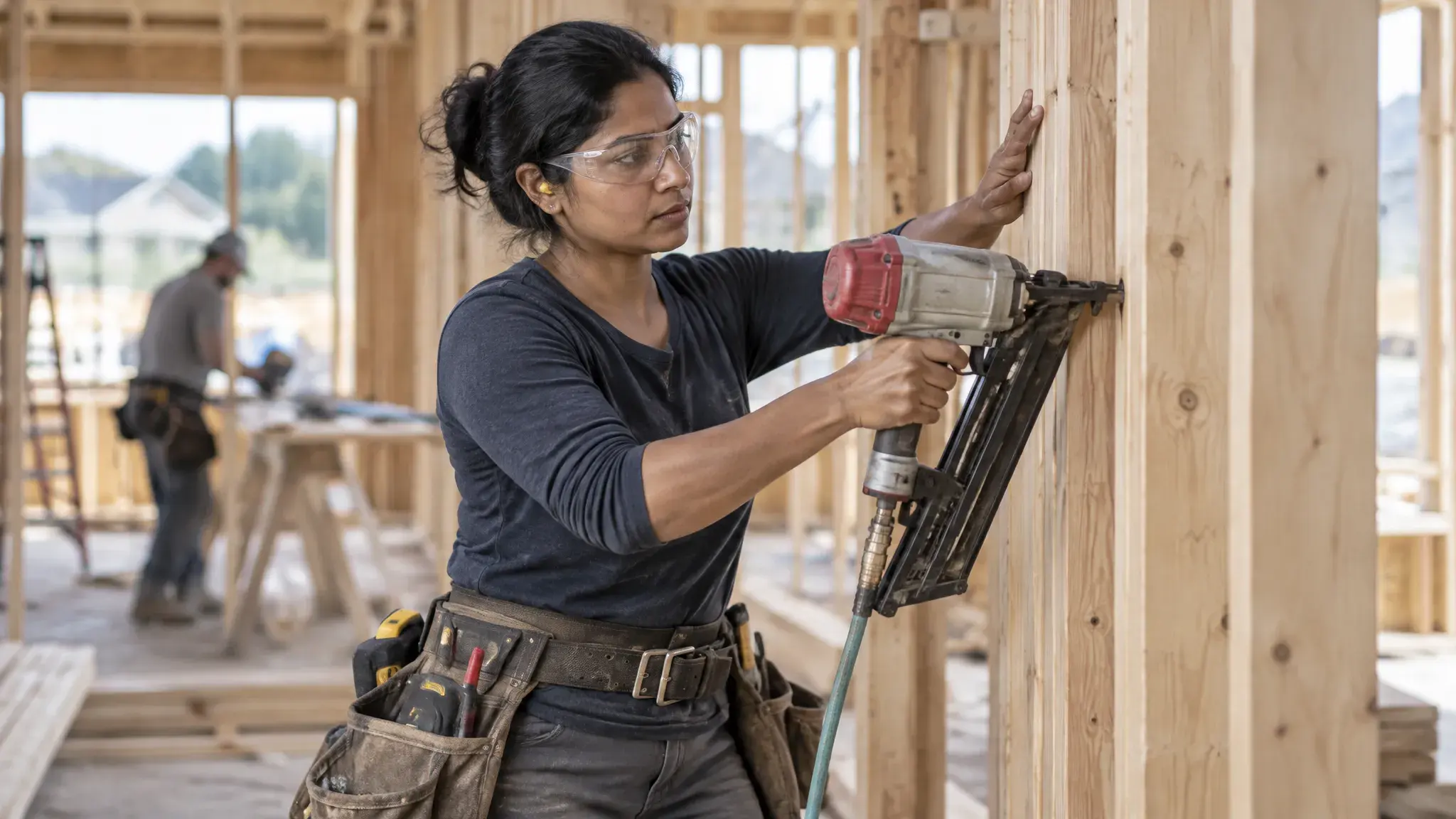
Builds and repairs the wood-framed structures, cabinetry, and finish work that make up most homes and commercial buildings — from framing a house to hanging a door so it actually closes right.
Salary
- Entry-level
- $40,500
- Mid-career
- $60,500
- Senior
- $100,000
Source: BLS OEWS, May 2025
Job outlook
- Growth, 2025–35
- +4%
- As fast as average
- Openings each year
- 62,800
- New jobs plus people retiring or moving on
- Jobs in 2025
- 889,700
- +35,000 by 2035
Source: BLS Employment Projections, 2025–35. Growth for all jobs is +3.5%. See the BLS profile
A day on the job
What people in this job typically spend their time doing.
- Read blueprints and plans to lay out a project and figure out materials
- Measure, mark and cut wood and other materials with hand and power tools
- Build and install frames, floors, cabinets, doors, windows and trim
- Check that work is level and straight, and repair or replace damaged sections
- Order lumber and supplies and keep the work area safe and clean
- Keep job records and prepare cost estimates for clients
Adapted from O*NET OnLine (47-2031.00), U.S. Department of Labor, used under the CC BY 4.0 license.
Residential or commercial
The same trade can look quite different in a house than on a big job site.
Residential
Homes
- Framing, trim, cabinets, decks and remodels
- About 1 in 4 carpenters work in residential building construction
- Another 1 in 4 are self-employed, often in home building
Commercial
Tall buildings, bridges and tunnels
- Concrete forms, scaffolds, and supports for bridges, tunnels and sewers
- Interior work in offices and stores, such as walls, doors and ceilings
- About 1 in 8 work in nonresidential building construction
Every carpenter needs OSHA 10-hour safety training; there is no state license for most carpentry.
Adapted from the BLS Occupational Outlook Handbook. BLS does not publish separate pay for home and commercial work.
Union or non-union
How common unions are varies a lot by trade and by state. Joining one changes how you train, find work and get paid.
- Union members
- 16.4%
- of construction trade workers, vs 5.9% across the private sector
- Union, median weekly pay
- $1,561
- Full-time union members
- Non-union, median weekly pay
- $1,004
- Full-time workers not in a union
Union
United Brotherhood of Carpenters (UBC)
- Train in a registered apprenticeship run jointly by the union and its contractors, paid on the job
- Get sent to jobs from the union's referral list (the hiring hall), so work can follow you from one contractor to the next
- Pay, raises, health coverage and usually a pension are set by a contract
- Pay union dues, and between jobs you may wait your turn on the out-of-work list
Non-union
Often called merit shop or open shop
- Train through a contractor group such as Associated Builders and Contractors, a company program, a trade school or on the job
- Get hired directly by a contractor, with no hall or list to wait on
- Pay and benefits are set by each employer, so they vary more from shop to shop
- No dues; raises and promotions depend on the employer and your own record
Membership and pay are for all construction and extraction occupations in BLS Union Members, 2025 (earnings table), not this trade alone. Part of the pay gap reflects where union jobs are, which varies a lot by state and type of project, so compare real offers where you live. Also see Associated Builders and Contractors.
Getting in
A 3-4 year paid apprenticeship (through a union like the Carpenters union or a nonunion contractor) is the standard path — you learn framing, finish work, and blueprint reading on the job, no college degree required.
Progression
- Carpenter's Apprentice
- Carpenter
- Lead Carpenter / Foreman
- General Contractor (own business)
Where this can lead

Top Employers
- General contractors and homebuilders The most common employer — framing crews and finish carpenters typically work for a builder or contracting company rather than independently.
- United Brotherhood of Carpenters (UBC) signatory contractors Union contractors tend to pay more and offer pension benefits, particularly on larger commercial jobs, in exchange for dues and hiring-hall dispatch.
- Cabinet and millwork shops Finish-focused carpenters can move into shop-based cabinetry and custom millwork work, trading outdoor job sites for steadier indoor hours.
Networking & job search

- The United Brotherhood of Carpenters (UBC) runs apprenticeship programs directly through its regional training centers — applying there is the clearest entry point.
- Showing up at residential or commercial job sites and asking a foreman directly whether they're hiring helpers is a genuinely common way people break in.
- Local home builders' association meetups put you in the room with the general contractors who do the actual hiring.
Example trajectories
Out of high school → UBC carpentry apprenticeship → framing carpenter for a residential builder → lead carpenter running their own small crew, 7 years in.