Broadcast, Sound & Video Technicians
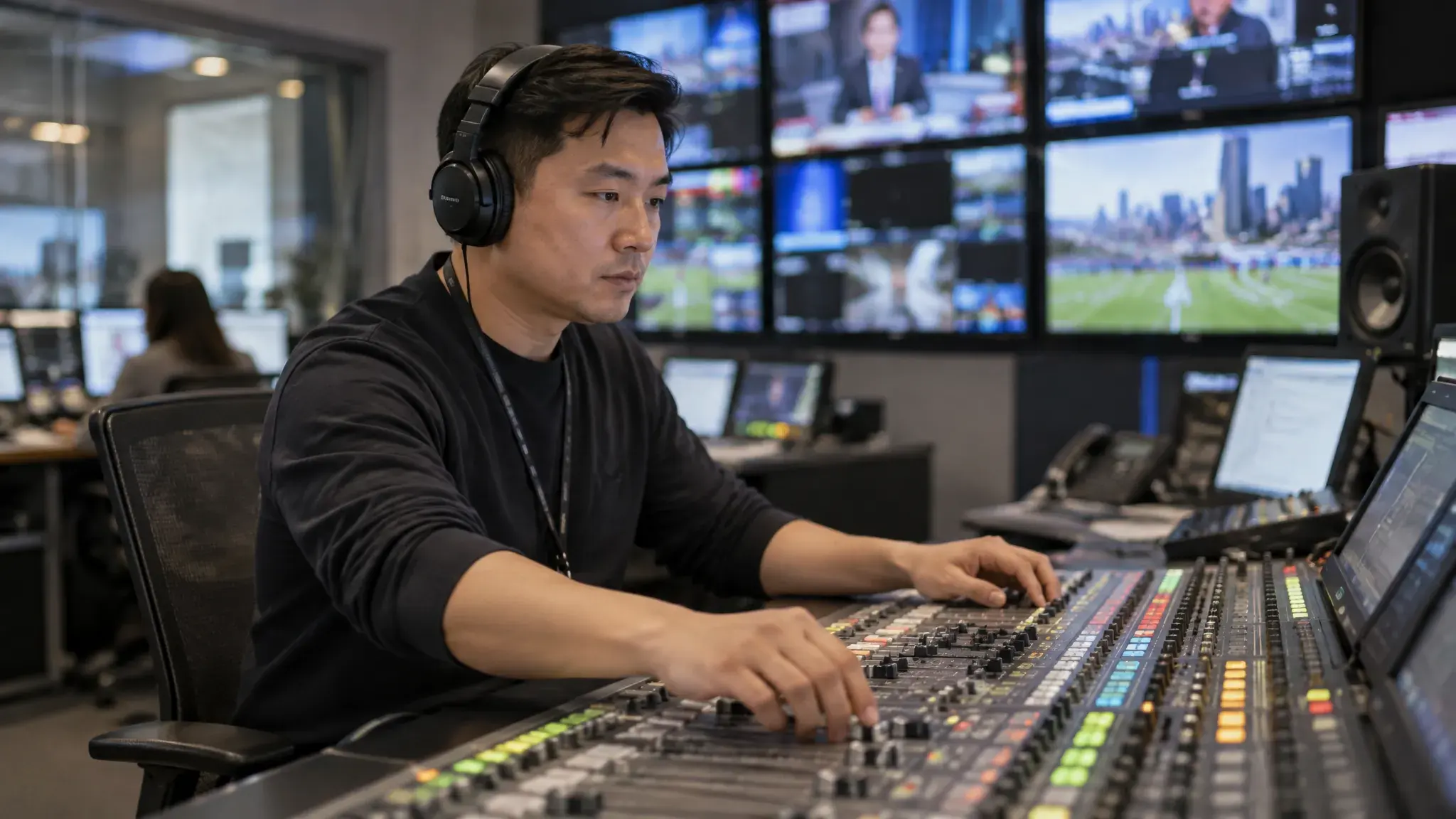
Operates and maintains the technical equipment behind broadcasts, recordings, and live events — cameras, audio boards, transmission and streaming systems — for TV and radio stations, recording studios, and live-event production companies.
Salary
- Entry-level
- $37,000
- Mid-career
- $60,000
- Senior
- $108,500
Source: BLS OEWS, May 2025
Job outlook
- Growth, 2025–35
- +1%
- Slower than average
- Openings each year
- 9,800
- New jobs plus people retiring or moving on
- Jobs in 2025
- 136,600
- +1,700 by 2035
Source: BLS Employment Projections, 2025–35. Growth for all jobs is +3.5%. See the BLS profile
A day on the job
What people in this job typically spend their time doing.
- Set up and run equipment for recording, editing and broadcasting shows
- Control lighting and sound during live events
- Record, mix and edit audio, such as soundtracks
- Watch picture and sound feeds for quality and alert directors to problems
- Find and fix problems with audio and video systems
- Clean, maintain and do small repairs on equipment
Adapted from O*NET OnLine (27-4011.00), U.S. Department of Labor, used under the CC BY 4.0 license.
Getting in
A postsecondary certificate or associate degree in broadcast technology or audio engineering is the common path in, and many technicians build skills through hands-on work at a campus radio or TV station before it's a paid job.
Progression
- Studio/Production Assistant
- Broadcast or Sound Technician
- Senior Technician
- Chief Engineer / Technical Director
Where this can lead

Top Employers
- TV and radio stations The traditional home for broadcast technicians, running master control and transmission equipment, though staffing has shrunk as stations consolidate and automate.
- Recording and production studios Audio-focused technicians here work on music, podcasts, and post-production sound, a path that rewards a strong ear alongside technical skill.
- Live-event and concert production companies Often seasonal or freelance work setting up and running sound and video for concerts, conferences, and other live events, a common way to build a broad equipment resume.
Networking & job search

- The Society of Broadcast Engineers offers a student membership with certification exams that carry real weight when applying to stations and production houses.
- Volunteering or working at a campus radio or TV station is the most common way technicians get real hands-on hours with broadcast-grade equipment before graduation.
- Local live-event and concert production companies hire technicians seasonally, which is a practical way to build a resume across both broadcast and live-sound work.
Example trajectories
Campus radio station volunteer → studio assistant at a local TV affiliate → broadcast technician running master control, 4 years in.