Water Transportation Workers
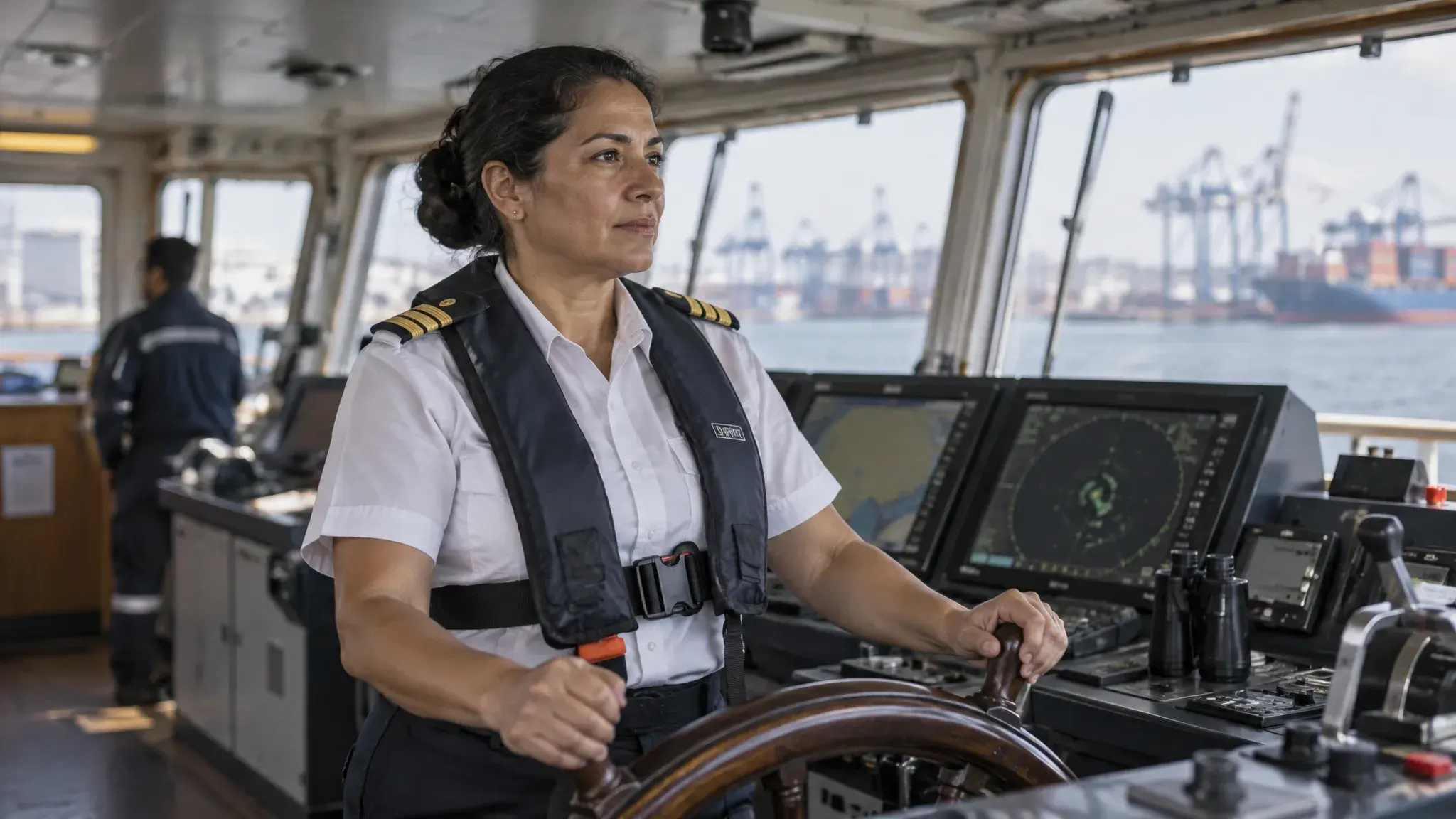
Operates and navigates ships, tugboats, and ferries, moving cargo and passengers across oceans, rivers, and harbors.
Salary
- Entry-level
- $38,000
- Mid-career
- $72,000
- Senior
- $145,500
Source: BLS OEWS, May 2025
Job outlook
- Growth, 2025–35
- +4%
- As fast as average
- Openings each year
- 8,600
- New jobs plus people retiring or moving on
- Jobs in 2025
- 85,900
- +3,100 by 2035
Source: BLS Employment Projections, 2025–35. Growth for all jobs is +3.5%. See the BLS profile
A day on the job
What people in this job typically spend their time doing.
- Check maps, charts, and weather reports to plan a ship's route
- Steer vessels using radar, depth finders, buoys, and lighthouses
- Dock and undock ships, sometimes through tight spaces like locks
- Stand watch while the ship is under way
- Talk with shore staff and other vessels by radio
- Inspect the vessel and its equipment for safety and rule compliance
Adapted from O*NET OnLine (53-5021.00), U.S. Department of Labor, used under the CC BY 4.0 license.
Getting in
Most water transportation workers train through maritime academies, union apprenticeships, or by working up from entry-level deckhand positions rather than a four-year degree.
Progression
- Deckhand or Ordinary Seaman
- Able Seaman or Engine Room Rating
- Mate or Assistant Engineer
- Captain or Chief Engineer
Where this can lead

Top Employers
- Tugboat and barge companies (e.g. Kirby) Move cargo on rivers and harbors.
- Cargo and cruise shipping lines Ocean voyages.
- Ferry systems and government (e.g. Military Sealift Command) Steady routes and public jobs.
Networking & job search

- You'll need a Merchant Mariner Credential and a TWIC card from the U.S. Coast Guard and TSA.
- Maritime academies train officers; union schools (like the Seafarers' school) train entry-level mariners.
- Long rotations on ships or tugboats are followed by weeks off at home.
Example trajectories
Gil
Deckhand on a tugboat → able seaman → mate → tugboat captain.
Nell
Maritime academy → third assistant engineer on a cargo ship → chief engineer.