Solar Photovoltaic Installers
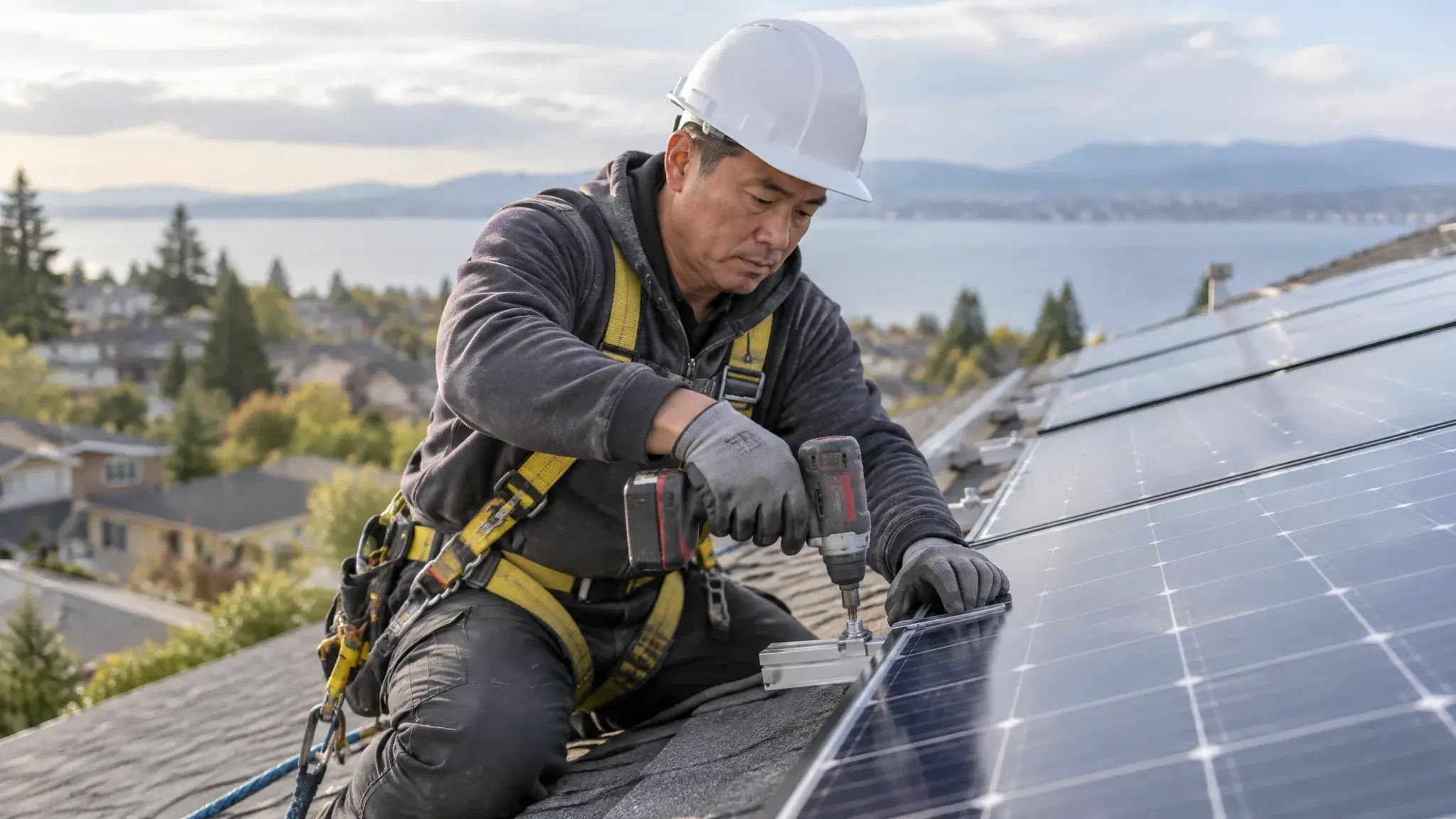
Installs and wires solar panel systems on rooftops and in solar farms — one of the fastest-growing trades, combining hands-on construction work with a fast-changing renewable-energy industry.
Salary
- Entry-level
- $41,500
- Mid-career
- $53,000
- Senior
- $80,000
Source: BLS OEWS, May 2025
Job outlook
- Growth, 2025–35
- +37%
- Much faster than average
- Openings each year
- 4,200
- New jobs plus people retiring or moving on
- Jobs in 2025
- 31,100
- +11,300 by 2035
Source: BLS Employment Projections, 2025–35. Growth for all jobs is +3.5%. See the BLS profile
A day on the job
What people in this job typically spend their time doing.
- Check rooftops and sites for good sun exposure and a strong structure
- Assemble solar panels and mount them on support racks
- Connect wiring between panels and check grounding and connections
- Seal panels and mounts against weather
- Test voltages and turn on systems to make sure they work as expected
- Perform routine maintenance and keep records of system performance
Adapted from O*NET OnLine (47-2231.00), U.S. Department of Labor, used under the CC BY 4.0 license.
Residential or commercial
The same trade can look quite different in a house than on a big job site.
Residential
Home rooftops
- Mount panels on house roofs, with some work in attics and crawl spaces
- Some jobs use solar shingles or thin solar film instead of panels
Commercial
Flat roofs and solar farms
- Flat commercial roofs need racking that tilts the panels toward the sun
- Solar farms are built at ground level, often far from town
- About 1 in 8 installers work for utilities
Some states require a license, and some subsidized projects require certified installers.
Adapted from the BLS Occupational Outlook Handbook. BLS does not publish separate pay for home and commercial work.
Union or non-union
How common unions are varies a lot by trade and by state. Joining one changes how you train, find work and get paid.
- Union members
- 16.4%
- of construction trade workers, vs 5.9% across the private sector
- Union, median weekly pay
- $1,561
- Full-time union members
- Non-union, median weekly pay
- $1,004
- Full-time workers not in a union
Union
International Brotherhood of Electrical Workers (IBEW)
- Train in a registered apprenticeship run jointly by the union and its contractors, paid on the job
- Get sent to jobs from the union's referral list (the hiring hall), so work can follow you from one contractor to the next
- Pay, raises, health coverage and usually a pension are set by a contract
- Pay union dues, and between jobs you may wait your turn on the out-of-work list
- Electrician and roofing apprentices can add solar training modules
Non-union
Often called merit shop or open shop
- Train through a contractor group such as Associated Builders and Contractors, a company program, a trade school or on the job
- Get hired directly by a contractor, with no hall or list to wait on
- Pay and benefits are set by each employer, so they vary more from shop to shop
- No dues; raises and promotions depend on the employer and your own record
Membership and pay are for all construction and extraction occupations in BLS Union Members, 2025 (earnings table), not this trade alone. Part of the pay gap reflects where union jobs are, which varies a lot by state and type of project, so compare real offers where you live. Also see Associated Builders and Contractors.
Getting in
A short trade-school or community-college solar installer certificate (often just weeks to a few months), followed by paid on-the-job training and optional NABCEP certification, is the standard path — no college degree needed.
Progression
- Solar Installer Trainee
- Solar Photovoltaic Installer
- Lead Installer / Crew Supervisor
- Solar Project Manager
Where this can lead
Top Employers
- Residential solar installation companies (e.g. Sunrun, SunPower dealers) The fastest-growing segment — national and regional installers hire crews directly, often with commission incentives tied to install volume.
- Commercial and utility-scale solar developers Larger installations on warehouses, businesses, and solar farms offer steadier project-based work, though it can involve more travel between sites.
- Electrical contractors adding solar divisions Many established electrical contracting firms have added solar installation as a service line, giving electricians a route into the trade without switching employers entirely.
Networking & job search

- NABCEP (North American Board of Certified Energy Practitioners) certification is the credential employers recognize, and its site lists approved training providers by region.
- Local solar installation companies often hire trainees directly out of community-college solar programs — asking your program's career office about direct placement relationships is worth it.
- Solar industry trade shows and regional clean-energy job fairs are a fast way to meet installers hiring for the next season's crews.
Example trajectories
Community college solar installer certificate → trainee on a residential install crew → NABCEP-certified installer → crew lead, 4 years in.