Radiologic Technologists
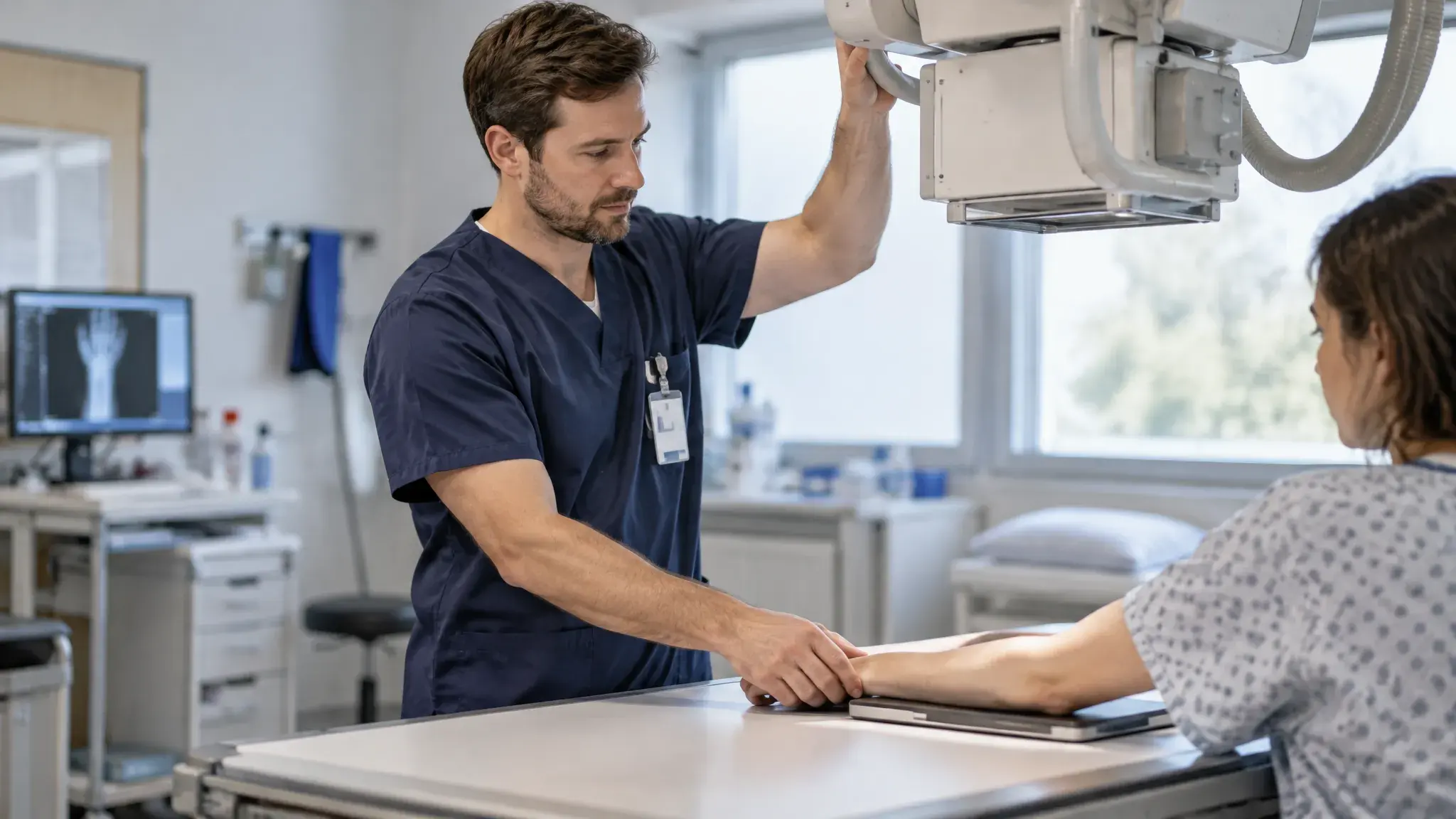
Operates X-ray and other imaging equipment to produce diagnostic images for physicians, positioning patients and ensuring image quality while limiting radiation exposure.
Salary
- Entry-level
- $56,000
- Mid-career
- $80,000
- Senior
- $118,500
Source: BLS OEWS, May 2025
Job outlook
- Growth, 2025–35
- +5%
- Faster than average
- Openings each year
- 15,300
- New jobs plus people retiring or moving on
- Jobs in 2025
- 278,100
- +15,100 by 2035
Source: BLS Employment Projections, 2025–35. Growth for all jobs is +3.5%. See the BLS profile
A day on the job
What people in this job typically spend their time doing.
- Explain the scan to patients and keep them safe and comfortable
- Position patients and set up X-ray equipment for the view the doctor needs
- Take images and redo any that are not clear enough
- Use shields and safety steps to limit radiation exposure
- Run quality checks on equipment and report any problems
- Keep patient records and file images in the digital system
Adapted from O*NET OnLine (29-2034.00), U.S. Department of Labor, used under the CC BY 4.0 license.
Getting in
Most radiologic technologists complete an associate degree in radiologic technology rather than a bachelor's degree, followed by state licensure and national certification.
Degrees that help
Progression
- Radiography Student
- Registered Radiologic Technologist (ARRT)
- Specialist in CT, MRI, or Mammography
- Lead Technologist or Imaging Manager
Where this can lead
Top Employers
- Hospitals Busy imaging departments with round-the-clock shifts.
- Outpatient imaging centers Regular hours and specialty imaging.
- Physician offices and urgent care Smaller settings with X-ray work.
Networking & job search

- Choose an accredited program so you can sit for the ARRT exam.
- Clinical sites often hire their students — treat rotations like job interviews.
- Adding CT or MRI certification raises pay and opens more jobs.
Example trajectories
Associate degree in radiography → X-ray tech → CT technologist → lead CT technologist.
Rad tech → MRI certification → MRI technologist → imaging manager at an outpatient center.