Quality Control Inspectors
Examines products, materials, and processes against specifications, flagging defects before goods ship and keeping manufacturers compliant with quality standards.
Salary
- Entry-level
- $35,500
- Mid-career
- $48,500
- Senior
- $78,000
Source: BLS OEWS, May 2025
Job outlook
- Growth, 2025–35
- +3%
- As fast as average
- Openings each year
- 66,700
- New jobs plus people retiring or moving on
- Jobs in 2025
- 602,000
- +15,200 by 2035
Source: BLS Employment Projections, 2025–35. Growth for all jobs is +3.5%. See the BLS profile
A day on the job
What people in this job typically spend their time doing.
- Inspect, test, and measure products against specifications
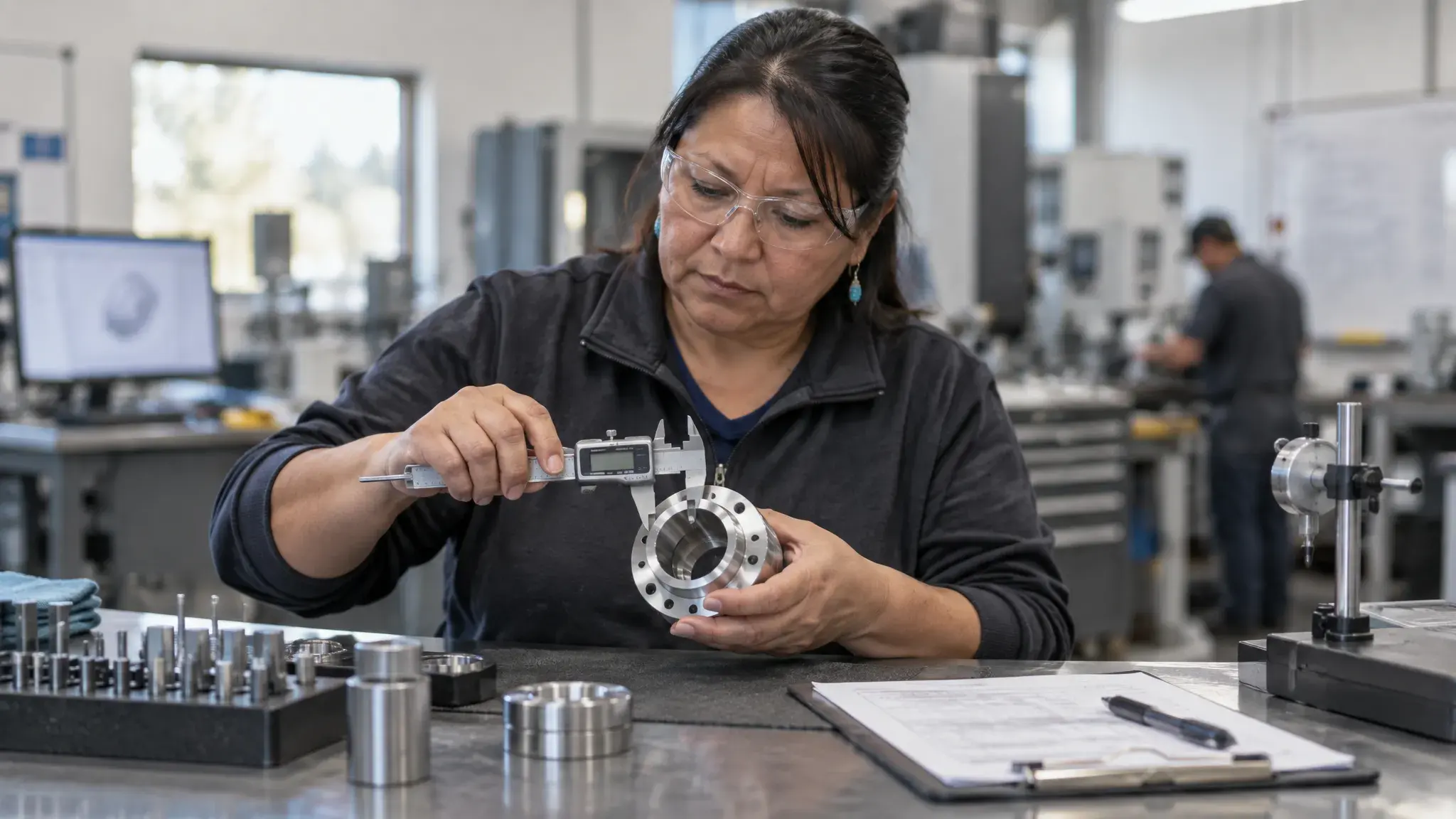
- Measure parts with tools like calipers and micrometers
- Read blueprints and manuals to learn what each product should meet
- Reject or mark items that don't pass inspection
- Record test results and write inspection reports
- Alert supervisors to production problems and suggest fixes
Adapted from O*NET OnLine (51-9061.00), U.S. Department of Labor, used under the CC BY 4.0 license.
Getting in
Quality control inspectors typically train on the job, learning a company's specific standards and inspection tools rather than completing a degree program.
Progression
- Quality Inspector
- Senior Inspector or Quality Technician
- Quality Engineer (often with a degree) or Quality Supervisor
- Quality Manager
Where this can lead


Top Employers
- Manufacturers of every kind Automotive, aerospace, electronics, and food plants all need inspectors.
- Medical device and pharmaceutical companies Strict regulations mean heavy documentation and better pay.
- Testing and inspection companies Inspect products and materials for many clients.
Networking & job search

- The American Society for Quality (ASQ) offers certifications like Certified Quality Inspector and Certified Quality Technician that raise your pay.
- Learn to read blueprints and use measuring tools like calipers, micrometers, and coordinate measuring machines (CMMs).
- Volunteer for audits and corrective-action projects — that's how inspectors move into quality engineering.
Example trajectories
Assembly line worker → quality inspector → ASQ certified quality technician → quality supervisor at an auto parts plant.
Inspector at a medical device company → CMM programmer → quality engineer after an associate degree.