Materials Engineers
Develops and tests the materials — metals, polymers, ceramics, composites — that other engineers build products out of, working to improve strength, durability, or cost for a specific application.
Salary
- Entry-level
- $72,500
- Mid-career
- $113,000
- Senior
- $175,500
Source: BLS OEWS, May 2025
Job outlook
- Growth, 2025–35
- +8%
- Much faster than average
- Openings each year
- 1,300
- New jobs plus people retiring or moving on
- Jobs in 2025
- 23,800
- +1,800 by 2035
Source: BLS Employment Projections, 2025–35. Growth for all jobs is +3.5%. See the BLS profile
A day on the job
What people in this job typically spend their time doing.
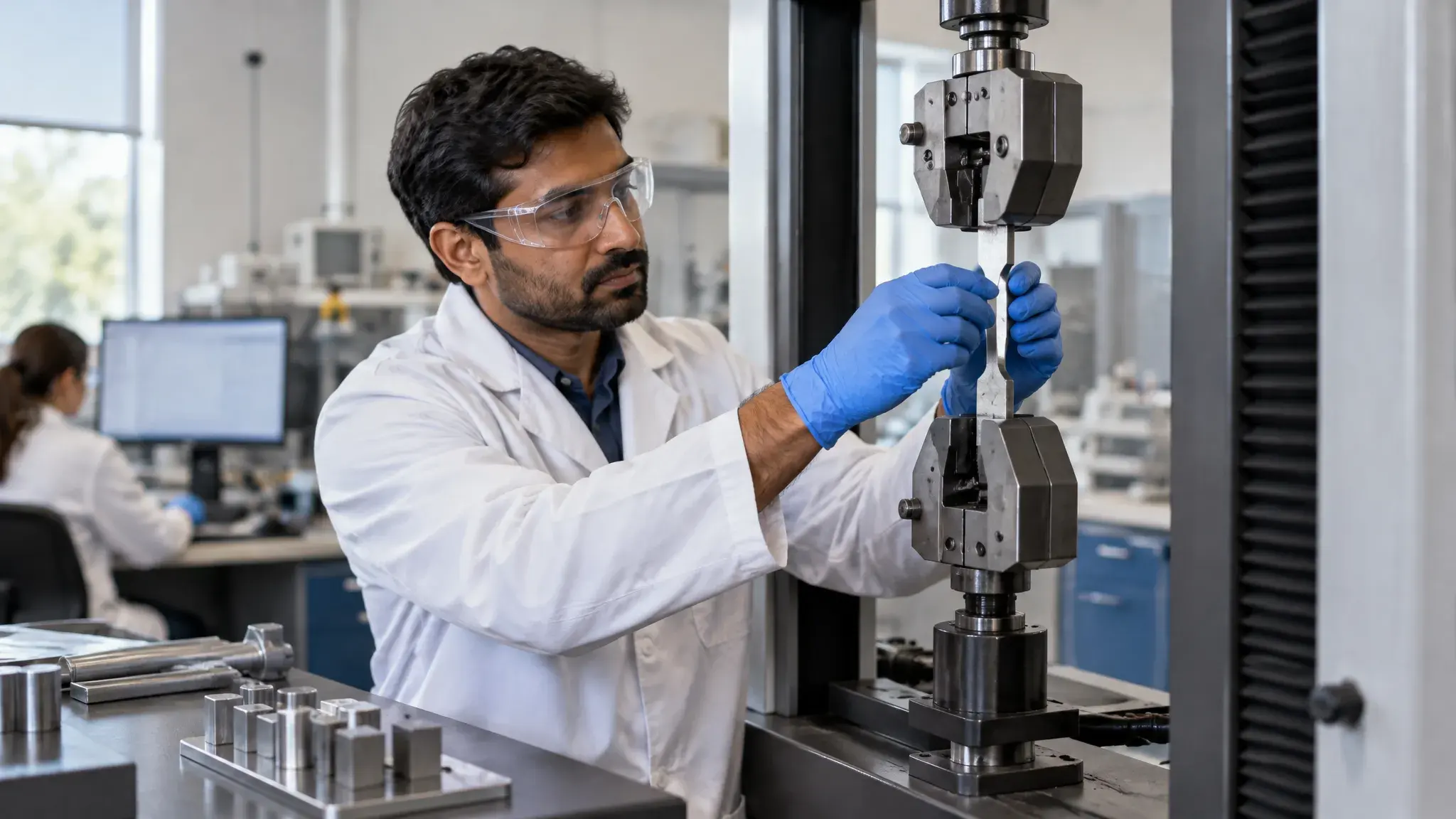
- Test raw materials and finished products to make sure they meet quality standards
- Recommend materials for new products based on strength, weight, heat tolerance and cost
- Study failed products and lab results to find what went wrong and fix it
- Run computer simulations of how materials will behave
- Lead technicians and other engineers in developing new materials
- Write proposals, budgets and reports for projects
Adapted from O*NET OnLine (17-2131.00), U.S. Department of Labor, used under the CC BY 4.0 license.
Getting in
A degree is required for this career.
Recommended degrees
Progression
- Materials Engineer I
- Materials Engineer
- Senior Materials Engineer
- Principal Materials Engineer / R&D Manager
Where this can lead

Top Employers
- Aerospace and defense manufacturers Develops and qualifies advanced composites and alloys where a material failure has serious safety consequences, so testing and documentation are heavy.
- Semiconductor and electronics companies Works at the smallest scale in the field, developing the thin films and substrates that chips are built on.
- Materials testing and research labs Contract or university-affiliated work characterizing materials for outside clients rather than developing a single company's own products.
Networking & job search

- ASM International (the materials science society) runs student chapters and a widely used materials database that's worth getting familiar with before internship interviews.
- Undergraduate research in a materials characterization lab (electron microscopy, mechanical testing) is a strong, specific talking point that separates candidates in this niche field.
- Aerospace, automotive, and semiconductor employers each recruit materials engineers somewhat differently — informational interviews across a couple of these sectors help narrow a specialization early.
Example trajectories
Wei
Chemical engineering degree → materials testing intern at an aerospace supplier → materials engineer developing composite components, 6 years in.