Machinists
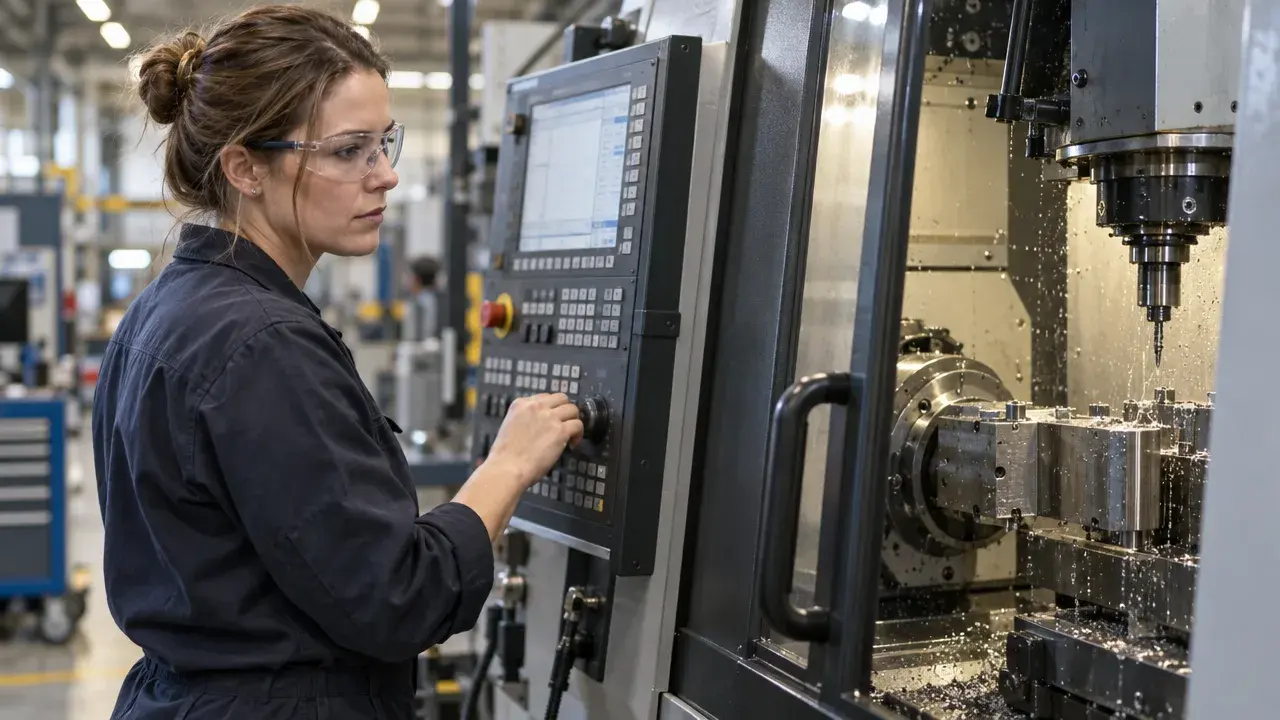
Sets up and operates machine tools like lathes and mills to shape metal or plastic parts to precise tolerances, working from blueprints or CAD files.
Salary
- Entry-level
- $39,000
- Mid-career
- $59,000
- Senior
- $80,000
Source: BLS OEWS, May 2025
Job outlook
- Growth, 2025–35
- −1%
- Decline
- Openings each year
- 30,400
- New jobs plus people retiring or moving on
- Jobs in 2025
- 344,900
- −2,200 by 2035
Source: BLS Employment Projections, 2025–35. Growth for all jobs is +3.5%. See the BLS profile
A day on the job
What people in this job typically spend their time doing.
- Study blueprints and sample parts to plan each job
- Set up and run lathes, mills, and grinders to make precise parts
- Program computer-controlled (CNC) machines
- Measure finished parts with precision tools to check for defects
- Watch machine speed and feed while cutting and adjust as needed
- Maintain and repair machine tools
Adapted from O*NET OnLine (51-4041.00), U.S. Department of Labor, used under the CC BY 4.0 license.
Getting in
Most machinists learn through a community college machining program or a formal apprenticeship rather than a bachelor's degree.
Progression
- Machine Operator or Apprentice Machinist
- Machinist
- CNC Programmer, Tool and Die Maker, or Lead Machinist
- Shop Supervisor, Manufacturing Engineer, or Machine Shop Owner
Where this can lead


Top Employers
- Aerospace and defense suppliers Precision parts with tight tolerances and higher pay.
- Job shops and contract manufacturers Small to mid-size shops making parts for many customers — great for learning a variety of work.
- Automotive and medical device manufacturers High-volume production and toolmaking for molds and dies.
Networking & job search

- Community college machining programs and registered apprenticeships often have direct hiring partners — ask instructors which local shops recruit their students.
- Earn NIMS credentials to show employers your skills on specific machines and measurement.
- Learning CAM software and CNC programming is the fastest way to move up from running machines to setting them up.
Example trajectories
Machining certificate → CNC operator at an aerospace parts shop → setup machinist → CNC programmer, 6 years in.
Four-year tool and die apprenticeship → tool and die maker at an automotive supplier → toolroom supervisor.