Geographers
Studies the spatial relationships between people, places, and the environment, producing research and mapped analysis used by government agencies, urban planners, and businesses making location decisions.
Salary
- Entry-level
- $67,000
- Mid-career
- $102,000
- Senior
- $136,500
Source: BLS OEWS, May 2025
Job outlook
- Growth, 2025–35
- −2%
- Decline
- Openings each year
- 100
- New jobs plus people retiring or moving on
- Jobs in 2025
- 1,500
- +0 by 2035
Source: BLS Employment Projections, 2025–35. Growth for all jobs is +3.5%. See the BLS profile
A day on the job
What people in this job typically spend their time doing.
- Collect data from censuses, field visits, satellite images and maps
- Study patterns in how people, places and the environment connect
- Make maps, graphs and diagrams with mapping software
- Write reports and present research findings
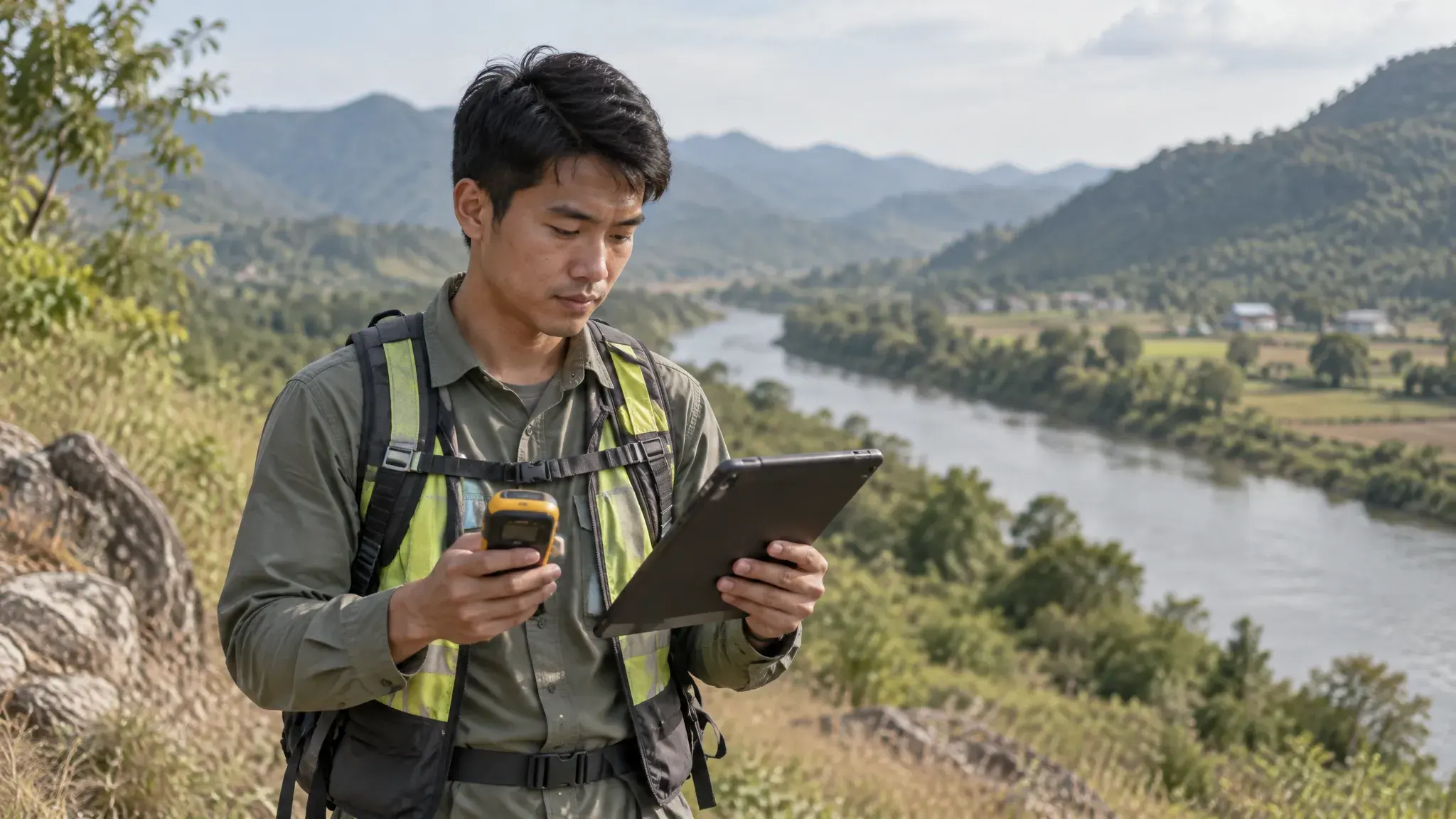
- Do field work outdoors, measuring things like landforms, climate and plants
- Advise clients on topics like land use, market areas or natural hazards
Adapted from O*NET OnLine (19-3092.00), U.S. Department of Labor, used under the CC BY 4.0 license.
Getting in
A degree is required for this career.
Recommended degrees
Progression
- GIS Analyst or Research Assistant
- Geographer or Geospatial Analyst
- Senior Geographer or Project Lead
- Program Manager or Chief of a Geospatial Unit
Where this can lead


Top Employers
- Federal agencies (e.g. U.S. Census Bureau, USGS, National Geospatial-Intelligence Agency) The largest employer of geographers; defense and intelligence roles may need a security clearance.
- Engineering and consulting firms (e.g. AECOM, Jacobs) Apply geographic analysis to infrastructure, environmental, and planning projects for clients.
- Mapping and location-technology companies (e.g. Esri) Hire geographers for product, data, and customer-facing roles, often paying more than government.
Networking & job search

- The American Association of Geographers' annual meeting has career sessions and a jobs center — worth attending even as a student.
- Federal agencies are the biggest employer, so learn how USAJOBS postings work and talk to geographers inside those agencies about how they got hired.
- Build a public portfolio of maps and spatial analyses (e.g. on ArcGIS Online or GitHub) — it shows GIS skill faster than any résumé line.
Example trajectories
Geography degree with a GIS minor → GIS technician for a county government → geographer at the Census Bureau working on boundary data, 6 years in.
Geography master's → geospatial analyst at an environmental consulting firm → senior analyst leading site-selection studies for renewable energy projects.