Exercise Physiologists
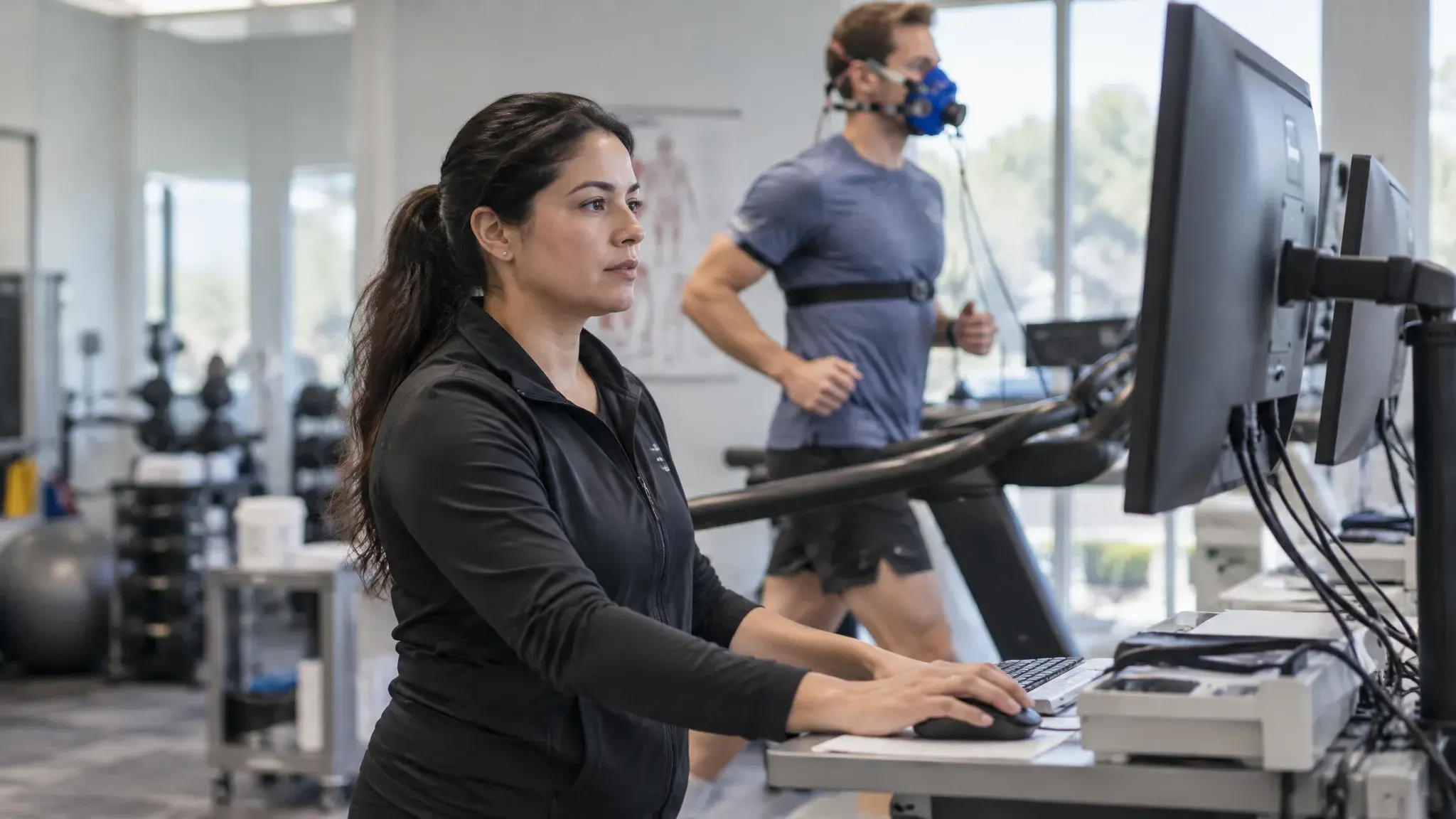
Develops and monitors exercise programs for patients recovering from chronic disease, injury, or surgery, using diagnostic tests like stress tests and body-composition analysis to track how the body responds to activity.
Salary
- Entry-level
- $43,000
- Mid-career
- $59,500
- Senior
- $80,500
Source: BLS OEWS, May 2025
Job outlook
- Growth, 2025–35
- +13%
- Much faster than average
- Openings each year
- 1,400
- New jobs plus people retiring or moving on
- Jobs in 2025
- 21,200
- +2,700 by 2035
Source: BLS Employment Projections, 2025–35. Growth for all jobs is +3.5%. See the BLS profile
A day on the job
What people in this job typically spend their time doing.
- Interview patients about their medical history and goals
- Run fitness tests, such as heart stress tests and body fat checks
- Design exercise programs to build strength, endurance and flexibility
- Show patients how to use equipment and do exercises safely
- Supervise exercise sessions and watch for signs of distress
- Review patient data to track progress and adjust programs
Adapted from O*NET OnLine (29-1128.00), U.S. Department of Labor, used under the CC BY 4.0 license.
Getting in
A degree is required for this career.
Recommended degrees
Progression
- Exercise Specialist or Cardiac Rehab Technician
- Clinical Exercise Physiologist
- Senior Exercise Physiologist or Program Coordinator
- Cardiac Rehab or Wellness Program Manager
Where this can lead

Top Employers
- Hospitals (cardiac and pulmonary rehab programs) The main clinical employer, helping patients recover from heart and lung problems.
- Wellness programs and fitness centers Design exercise plans for employees and members.
- Universities and research labs Run exercise testing for research studies.
Networking & job search

- Certifications from the American College of Sports Medicine (ACSM), such as Certified Clinical Exercise Physiologist, are what most hospital employers look for.
- Clinical internships in cardiac or pulmonary rehab are the main route into hospital jobs.
- Many exercise physiologists use the role as a step toward physical therapy or physician assistant school, so build relationships with clinicians who can write recommendations.
Example trajectories
Exercise science degree → cardiac rehab internship → clinical exercise physiologist at a hospital → cardiac rehab program coordinator.
Kinesiology degree → exercise physiologist at a corporate wellness program → went on to physical therapy school.