Chemists
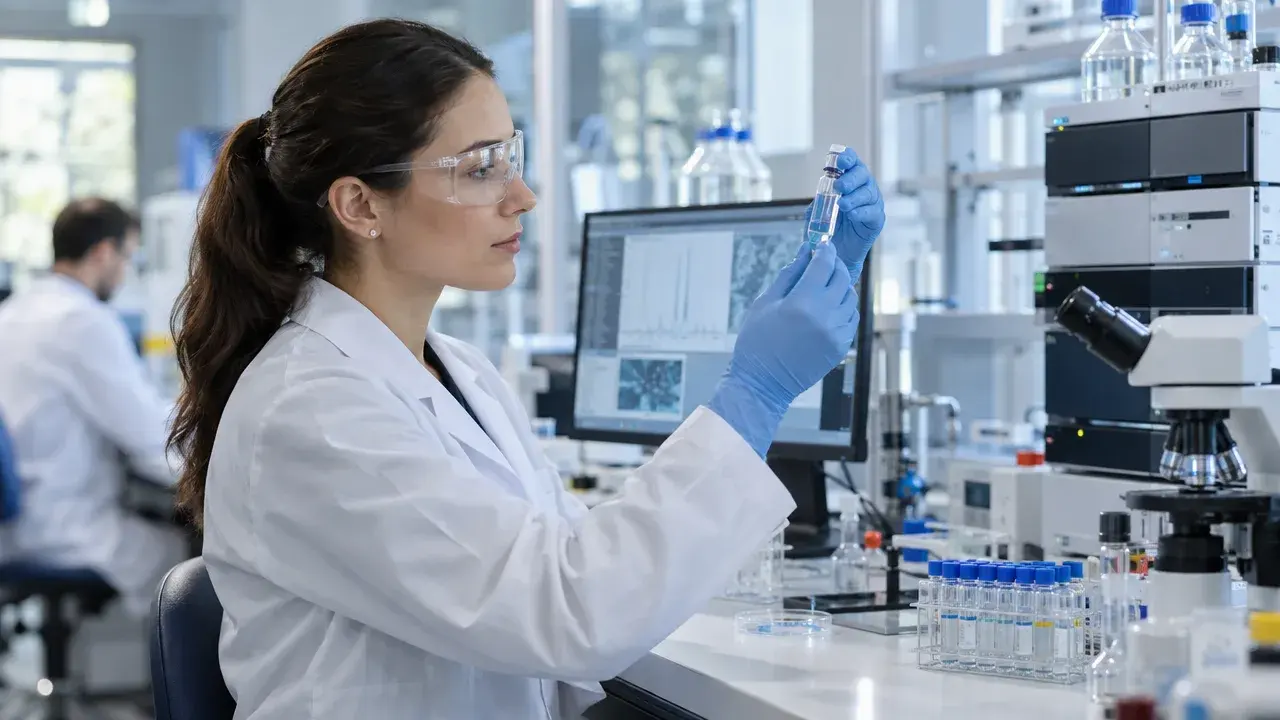
Studies the composition, structure, and properties of substances and develops new compounds or materials — in pharma, consumer products, materials science, or environmental testing, moving between lab bench work and data analysis.
Salary
- Entry-level
- $58,500
- Mid-career
- $91,000
- Senior
- $161,000
Source: BLS OEWS, May 2025
Job outlook
- Growth, 2025–35
- +7%
- Much faster than average
- Openings each year
- 6,500
- New jobs plus people retiring or moving on
- Jobs in 2025
- 93,500
- +6,200 by 2035
Source: BLS Employment Projections, 2025–35. Growth for all jobs is +3.5%. See the BLS profile
A day on the job
What people in this job typically spend their time doing.
- Develop and improve products, formulas and testing methods
- Analyze substances with lab techniques such as chromatography and spectroscopy
- Run quality control tests on materials and products
- Prepare test solutions and chemicals for lab staff
- Maintain and troubleshoot lab instruments
- Write technical reports and work with engineers to interpret results
Adapted from O*NET OnLine (19-2031.00), U.S. Department of Labor, used under the CC BY 4.0 license.
Getting in
A degree is required for this career.
Recommended degrees
Progression
- Associate Chemist
- Chemist
- Senior Chemist
- Principal Scientist / Lab Director
Where this can lead

Top Employers
- Pharmaceutical and specialty chemical manufacturers Formulation and process chemistry work with strong pay and the deepest instrumentation resources in the field.
- Consumer products companies (e.g. Procter & Gamble, Unilever) Develops the formulas behind everyday products; faster product cycles than pharma but usually a lighter regulatory load.
- Environmental and materials testing labs Contract testing work for outside clients — a common entry point with broader exposure to different chemistries early on.
Networking & job search

- Your regional American Chemical Society (ACS) chapter is the single best networking resource in this field, with events specifically aimed at students and early-career chemists.
- Instrumentation skills (mass spectrometry, chromatography, spectroscopy) are what separate resumes in this field — mention the specific instruments you've run, not just "lab experience."
- Poster sessions at ACS regional or national meetings are a low-pressure way to meet chemists working at companies you're interested in.
Example trajectories
Simone
Biochemistry degree → associate chemist at a specialty materials company → chemist developing new polymer formulations, 4 years in.