Masonry Workers
Builds and repairs walls, walkways, and structures using brick, concrete block, and stone, work that combines physical stamina with an eye for precise, lasting craftsmanship.
Salary
- Entry-level
- $39,500
- Mid-career
- $58,500
- Senior
- $91,500
Source: BLS OEWS, May 2025
Job outlook
- Growth, 2025–35
- +1%
- Slower than average
- Openings each year
- 18,400
- New jobs plus people retiring or moving on
- Jobs in 2025
- 277,700
- +3,300 by 2035
Source: BLS Employment Projections, 2025–35. Growth for all jobs is +3.5%. See the BLS profile
A day on the job
What people in this job typically spend their time doing.
- Read blueprints and figure out how much material a job needs
- Measure and mark guidelines using levels and plumb lines
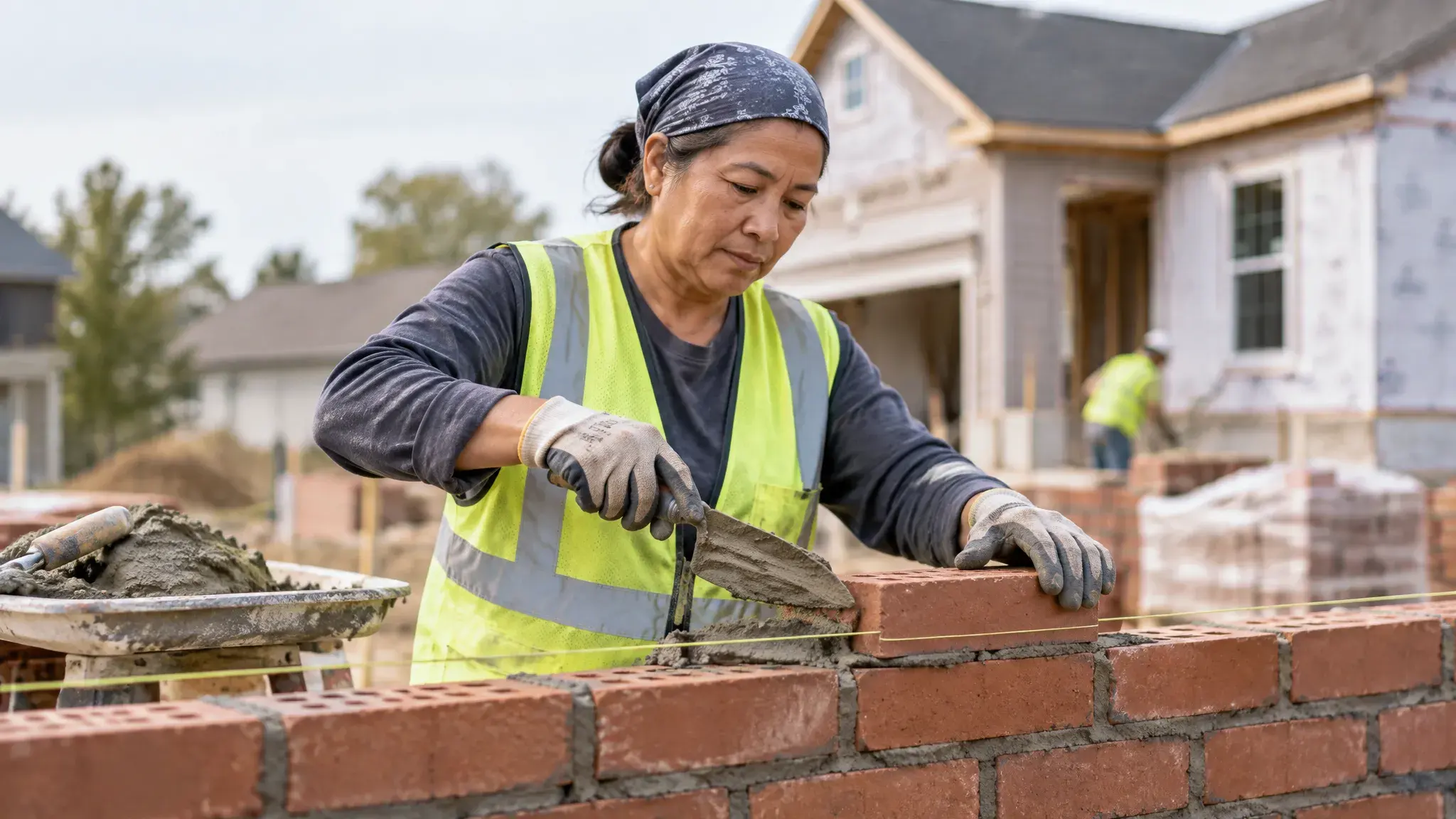
- Mix mortar and spread it to lay rows of brick or block
- Cut bricks and blocks to size with hammers or power saws
- Smooth and finish mortar joints for a clean, sealed look
- Inspect older brickwork and remove damaged pieces for repair
Adapted from O*NET OnLine (47-2021.00), U.S. Department of Labor, used under the CC BY 4.0 license.
Residential or commercial
The same trade can look quite different in a house than on a big job site.
Residential
Homes
- Brick and stone on house walls, chimneys, fireplaces and patios
- Repair work on older brick, such as pointing and cleaning
Commercial
Schools, offices and plants
- Block and brick walls for larger buildings, alongside concrete crews
- Refractory masons line boilers and furnaces in industrial plants
Many learn through an apprenticeship sponsored by a union or contractor association.
Adapted from the BLS Occupational Outlook Handbook. BLS does not publish separate pay for home and commercial work.
Union or non-union
How common unions are varies a lot by trade and by state. Joining one changes how you train, find work and get paid.
- Union members
- 16.4%
- of construction trade workers, vs 5.9% across the private sector
- Union, median weekly pay
- $1,561
- Full-time union members
- Non-union, median weekly pay
- $1,004
- Full-time workers not in a union
Union
International Union of Bricklayers and Allied Craftworkers (BAC)
- Train in a registered apprenticeship run jointly by the union and its contractors, paid on the job
- Get sent to jobs from the union's referral list (the hiring hall), so work can follow you from one contractor to the next
- Pay, raises, health coverage and usually a pension are set by a contract
- Pay union dues, and between jobs you may wait your turn on the out-of-work list
Non-union
Often called merit shop or open shop
- Train through a contractor group such as Associated Builders and Contractors, a company program, a trade school or on the job
- Get hired directly by a contractor, with no hall or list to wait on
- Pay and benefits are set by each employer, so they vary more from shop to shop
- No dues; raises and promotions depend on the employer and your own record
Membership and pay are for all construction and extraction occupations in BLS Union Members, 2025 (earnings table), not this trade alone. Part of the pay gap reflects where union jobs are, which varies a lot by state and type of project, so compare real offers where you live. Also see Associated Builders and Contractors.
Getting in
Most masons train through a 3-4 year apprenticeship combining paid on-the-job work with technical instruction, rather than a college degree.
Progression
- Mason Tender or Apprentice
- Journeyworker Mason
- Foreman
- Masonry Contractor
Where this can lead
Top Employers
- Masonry contractors Commercial and residential building.
- Restoration companies Repair historic brick and stone.
- Self-employment Patios, chimneys, and walls.
Networking & job search

- Union apprenticeships through the International Union of Bricklayers and Allied Craftworkers (BAC) offer paid on-the-job training plus classes, often with no tuition.
- Stone and restoration work pays well and is a growing niche.
- Keep photos of your work to show contractors and clients.
Example trajectories
Mason tender → bricklayer apprenticeship → journeyworker → masonry foreman.
Stonemason apprenticeship → historic restoration mason → owns a restoration company.