Athletic Trainers
Prevents, diagnoses, and rehabilitates injuries for athletes and other physically active patients, usually stationed at a school, sports team, or outpatient sports-medicine clinic rather than a hospital.
Salary
- Entry-level
- $48,000
- Mid-career
- $62,500
- Senior
- $89,000
Source: BLS OEWS, May 2025
Job outlook
- Growth, 2025–35
- +13%
- Much faster than average
- Openings each year
- 2,400
- New jobs plus people retiring or moving on
- Jobs in 2025
- 35,200
- +4,400 by 2035
Source: BLS Employment Projections, 2025–35. Growth for all jobs is +3.5%. See the BLS profile
A day on the job
What people in this job typically spend their time doing.
- Assess athletes' injuries and decide whether they need a doctor
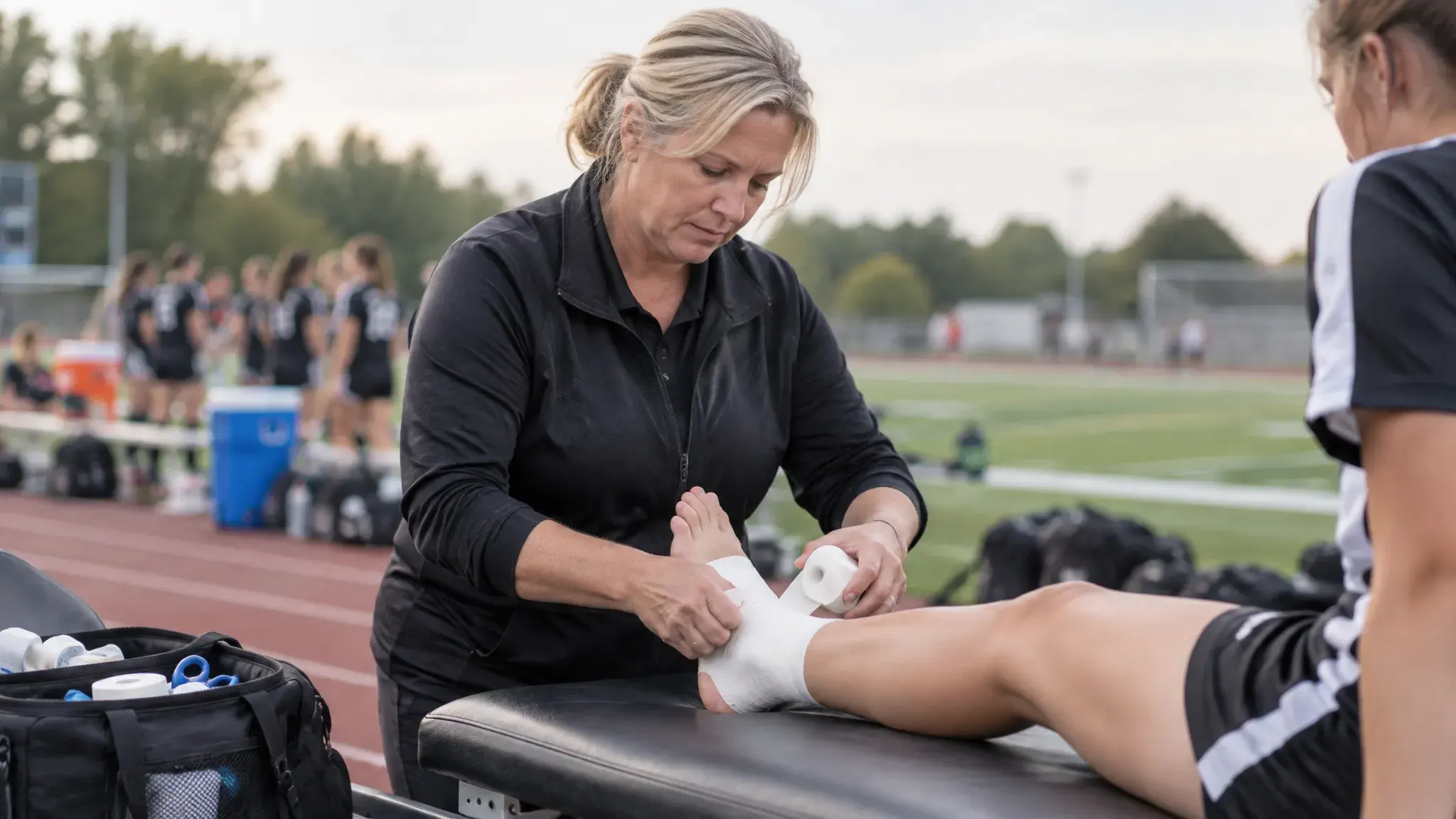
- Tape, bandage or brace ankles, wrists and other body parts
- Treat injuries and run rehabilitation programs with doctors
- Decide when an injured athlete is ready to play again
- Travel with teams to practices and games
- Keep injury records and update coaches on recovery
Adapted from O*NET OnLine (29-9091.00), U.S. Department of Labor, used under the CC BY 4.0 license.
Getting in
A degree is required for this career.
Recommended degrees
Progression
- Athletic Training Student (master's program)
- Certified Athletic Trainer (after passing the BOC exam)
- Head Athletic Trainer
- Director of Sports Medicine or Clinic Manager
Where this can lead

Top Employers
- High schools (often through hospital or clinic outreach programs) The most common setting, covering many sports and long evening and weekend hours.
- Colleges and professional teams Competitive roles with travel and long seasons.
- Clinics, hospitals, and industrial settings More regular hours, working on injury prevention and rehab.
Networking & job search

- Athletic training now requires a master's from a CAATE-accredited program, and your clinical rotations are where most first jobs come from.
- The National Athletic Trainers' Association (NATA) and its district meetings are the main professional network.
- Look beyond sports teams — clinics, factories, the military, and performing arts companies hire athletic trainers too.
Example trajectories
Exercise science degree → master's in athletic training → assistant athletic trainer at a university → head athletic trainer for a Division II program.
Athletic training master's → high school athletic trainer through a hospital outreach program → sports medicine outreach coordinator.